Everything here is written from scientific sources. If you have any doubts, check the original sources.
Your baby this week
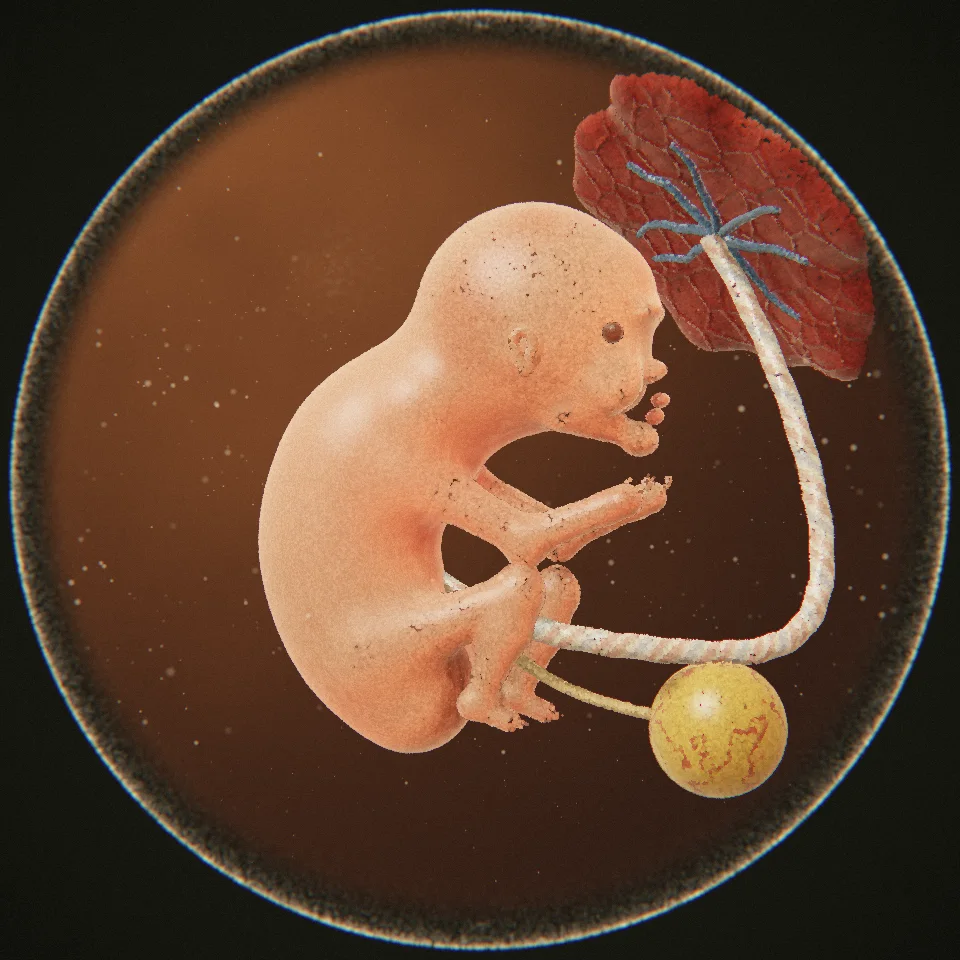
It is about 22 mm long from head to bottom, roughly the size of a strawberry1.
The face is looking more recognisable: the eyes are protected by eyelids, and there is a little mouth and a tongue with tiny taste buds. The hands and feet are developing, but there are no fingers or toes yet, just grooves where they will be1.
All the major internal organs, including the heart, brain, lungs, kidneys and gut, are developing, and bones are starting to form. The genitals are starting to take shape too, though you probably won’t find out the sex until the anomaly scan, which in the UK is at around 18 to 21 weeks1. We cover it in the week 20 guide.
The eyes are getting bigger and already have a bit of colour. It’s a myth that all babies are born with blue eyes: they can be anything from slate grey to inky black, depending on the parents’ genetics, and eye colour often changes after birth1.
Your body
Your breasts are bigger now and your waist may be thickening a little1.
Over the past few weeks, the pregnancy hormone human chorionic gonadotropin (hCG) has been doubling every 2 or 3 days, and at around 9 weeks it peaks. You also have higher levels of oestrogen and progesterone, which help increase the blood supply to your womb. That is why the sickness may carry on1.
Some people describe this time as an emotional rollercoaster. Get as much rest as you can and accept any offers of help. It’s a tough stage, but week by week you should start to feel better, and in a month you’ll reach the second trimester, when many people feel a lot better1.
The most common symptoms now are extreme tiredness, sickness and mood swings, along with a metallic taste, sore breasts, headaches, bloating and a stronger sense of smell1.
Health and tips
Little and often. When you’re tired and low it’s tempting to reach for the biscuits, but healthy snacks are a better choice. Eating little and often keeps your blood sugar stable, which can reduce morning sickness. The NHS suggests a boiled egg with wholemeal soldiers, hummus with carrot sticks, or pitta bread with grated cheese1.
Foods to be careful with. Most foods are safe, but some should be avoided or cooked thoroughly2:
- Unpasteurised milk and dairy, and soft mould-ripened or blue-veined cheeses such as brie or gorgonzola unless thoroughly cooked, because of the risk of listeriosis.
- Raw or undercooked meat, because of toxoplasmosis, and liver and liver products, which are very high in vitamin A.
- Cold cured meats such as chorizo or salami, unless cooked until steaming hot.
- Raw fish and shellfish, and swordfish, shark and marlin. No more than 2 portions of oily fish a week.
Caffeine. Have no more than 200 mg a day. A mug of instant coffee has about 100 mg, a mug of tea about 75 mg and a can of cola about 40 mg. Limit herbal teas to 4 cups a day and avoid those containing liquorice root2.
Vitamins and habits. Keep taking 400 micrograms of folic acid a day until at least week 12. There’s no need to eat for 2: a varied diet with plenty of fruit and veg is enough. Try to stop smoking and drinking alcohol1.
For your partner or supporter
Eating well is much easier if you do it together. If you are her partner or the person supporting her, this is a good time to pick up healthy habits and learn which foods to avoid in pregnancy. Taking over the cooking helps too, as cooking smells can make her feel sick3.
Money worries are common: there may be less income for a while, new costs and, later on, childcare. It can help to check what benefits you’re entitled to and start planning ahead3.
When to get help
If you’ve had a small amount of something that should be avoided and you didn’t get ill, it’s unlikely to affect your baby. Get advice soon if you feel unwell after eating it, if you’ve had vomiting and diarrhoea for more than 48 hours, or if you have symptoms of listeriosis or toxoplasmosis2.
Talk to your midwife or doctor too if you can’t keep food down4. If you bleed, call your maternity unit straight away, and get urgent help if the bleeding is heavy or you have severe tummy pain5.
Frequently asked questions
How big is the fetus at week 9 of pregnancy?
According to the NHS, it is about 22 mm, head to bottom.
Are all babies born with blue eyes?
No. It depends on the parents' genetics, and eye colour often changes after birth.
How much caffeine can I have during pregnancy?
The NHS recommends no more than 200 mg a day. A mug of instant coffee has about 100 mg and a mug of tea about 75 mg.
Sources
- National Health Service (NHS), Regne Unit. 9 weeks pregnant guide. NHS Best Start in Life.
- National Health Service (NHS), Regne Unit. Foods to avoid in pregnancy. nhs.uk.
- NHS 111 Wales. Dads and partners. 111.wales.nhs.uk.
- National Health Service (NHS), Regne Unit. 6 weeks pregnant guide. NHS Best Start in Life.
- National Health Service (NHS), Regne Unit. Vaginal bleeding in pregnancy. nhs.uk.
- Hospital Clínic de Barcelona. Pregnancy and Childbirth: alarm signs. clinicbarcelona.org.