Everything here is written from scientific sources. If you have any doubts, check the original sources.
Your baby this week
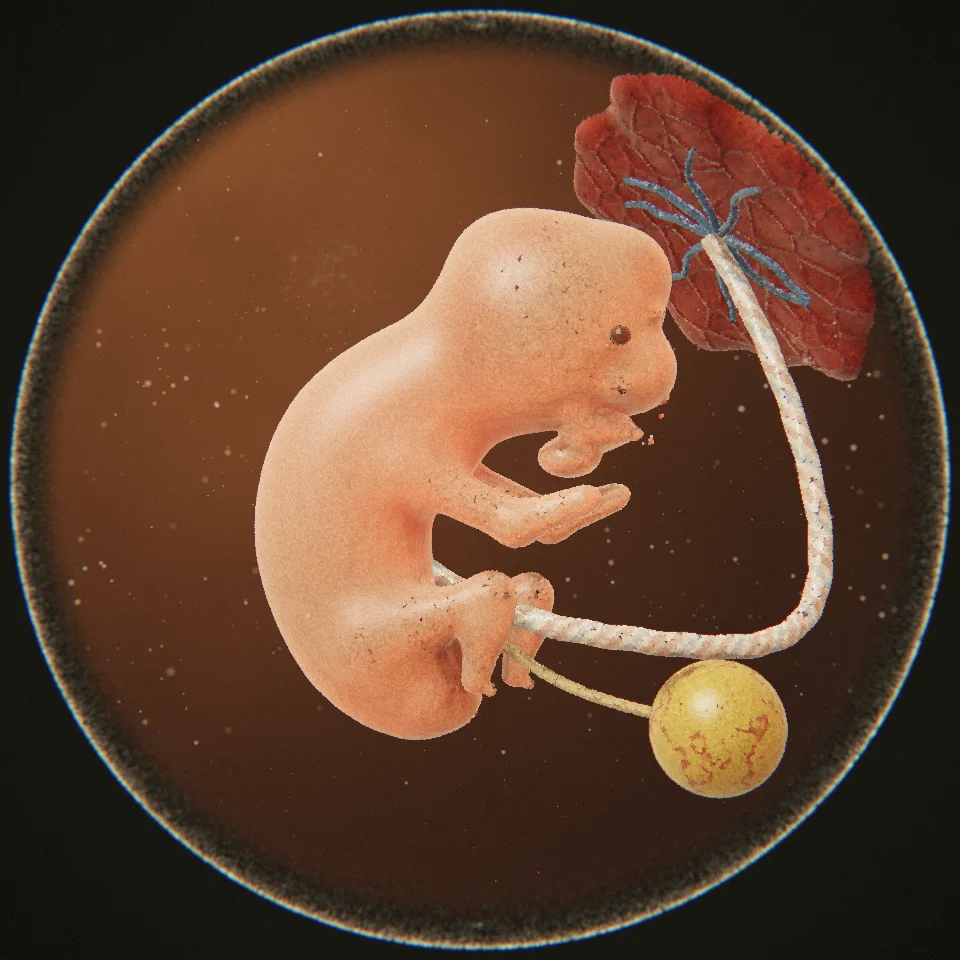
It is about 16 mm long, roughly the size of a raspberry. By next week it will have doubled in size1.
The tiny head has started to uncurl a little. The arms are getting longer and are now longer than the legs, because the upper body grows faster than the lower body. The legs are lengthening too, but the knees, ankles, thighs and toes haven’t developed yet1.
Around now, the NHS starts to use the word fetus, which means offspring in Latin1. Strictly speaking, the fetal stage begins at the end of week 102. Either way, by week 8 all the major organ systems have begun to form2.
Your body
It is common to feel bloated and have slightly larger breasts, but it will probably be a few more weeks before you start to look pregnant1.
Meanwhile, the placenta is getting ready to provide your baby with nutrients and oxygen and to take away waste. To attach itself to the wall of your womb, it is sprouting little branches1.
You may feel tired and sick, and you may be peeing more often as your growing womb presses on your bladder. If this starts to affect your sleep, try drinking plenty during the day but less in the evening1.
Other common symptoms include1:
- A metallic taste in your mouth and sore breasts.
- Headaches and mood swings.
- New food likes and dislikes, and a stronger sense of smell.
- A white, milky vaginal discharge.
- Light spotting or cramps a bit like period pains.
- Dark patches on your face (chloasma) and thicker, shinier hair.
Health and tips
Your mood. There may be times when you feel anxious and stressed. The NHS suggests resting as much as you can, eating about 6 small healthy meals a day and trying approaches such as mindfulness. The most important thing is to share your worries, and a good place to start is your midwife or doctor1.
Anxiety or depression can appear for the first time in pregnancy, or come back if you’ve had them before. It helps to eat a balanced diet, regularly make time for something you enjoy and stay active, because exercise boosts mood and improves sleep3.
Keeping active. The recommendation is 150 minutes of exercise a week. If you don’t exercise at the moment, you could start with 10 minutes a day1. Moderate activity is anything that lets you talk but not sing, such as walking, swimming or yoga. Starting a new vigorous activity, such as running, isn’t recommended4.
Appointments. In the UK, a first pregnancy usually involves around 10 appointments and 2 scans. You can ask whether it’s possible to see the same carer throughout your pregnancy1.
Vitamins and habits. Keep taking 400 micrograms of folic acid a day until at least week 12. Try to stop smoking and drinking alcohol, and go easy on caffeine1.
Medicines. If you have a long-term health condition, tell your specialist you’re pregnant as soon as possible, and don’t stop any regular medication without talking to them first1.
For your partner or supporter
In some health systems, such as the UK’s, when the pregnant woman is offered blood tests in early pregnancy, her partner may be asked for one too. This checks whether the baby is at risk of an inherited condition, such as sickle cell anaemia, thalassaemia or cystic fibrosis. You’ll also be asked about your family history and origin, as some of these conditions are more common in certain families5.
If she is anxious, encourage her to talk about it with her midwife, with you, or with family and friends. It may take a while before she opens up, so be patient5.
You may have mixed feelings too, even if the pregnancy was very much wanted. A baby brings new responsibilities, and it’s normal not to feel ready for them yet5.
When to get help
Light spotting can happen at this stage1, but if you bleed, call your midwife or maternity unit straight away. Get urgent help if the bleeding is heavy, if you have severe tummy or shoulder pain, or if you feel dizzy or faint6.
If you’re worried about your mental health, talk to your midwife or doctor. If you or someone close to you is having a mental health crisis, get urgent help3.
Frequently asked questions
How big is the fetus at week 8 of pregnancy?
According to the NHS, it is about 16 mm, head to bottom.
Is it normal to feel anxious in early pregnancy?
Yes, there may be times of anxiety and stress. It is important to talk to your midwife or doctor.
Why do I need to pee more often in early pregnancy?
Your growing womb presses on your bladder. If it wakes you at night, drink plenty during the day and less in the evening.
Sources
- National Health Service (NHS), Regne Unit. 8 weeks pregnant guide. NHS Best Start in Life.
- MSD Manual, versió per al públic. Stages of Development of the Fetus. msdmanuals.com.
- National Health Service (NHS), Regne Unit. Mental health in pregnancy. nhs.uk.
- National Health Service (NHS), Regne Unit. Exercise in pregnancy. nhs.uk.
- NHS 111 Wales. Dads and partners. 111.wales.nhs.uk.
- National Health Service (NHS), Regne Unit. Vaginal bleeding in pregnancy. nhs.uk.
- Hospital Clínic de Barcelona. Pregnancy and Childbirth: alarm signs. clinicbarcelona.org.