Everything here is written from scientific sources. If you have any doubts, check the original sources.
Your baby this week
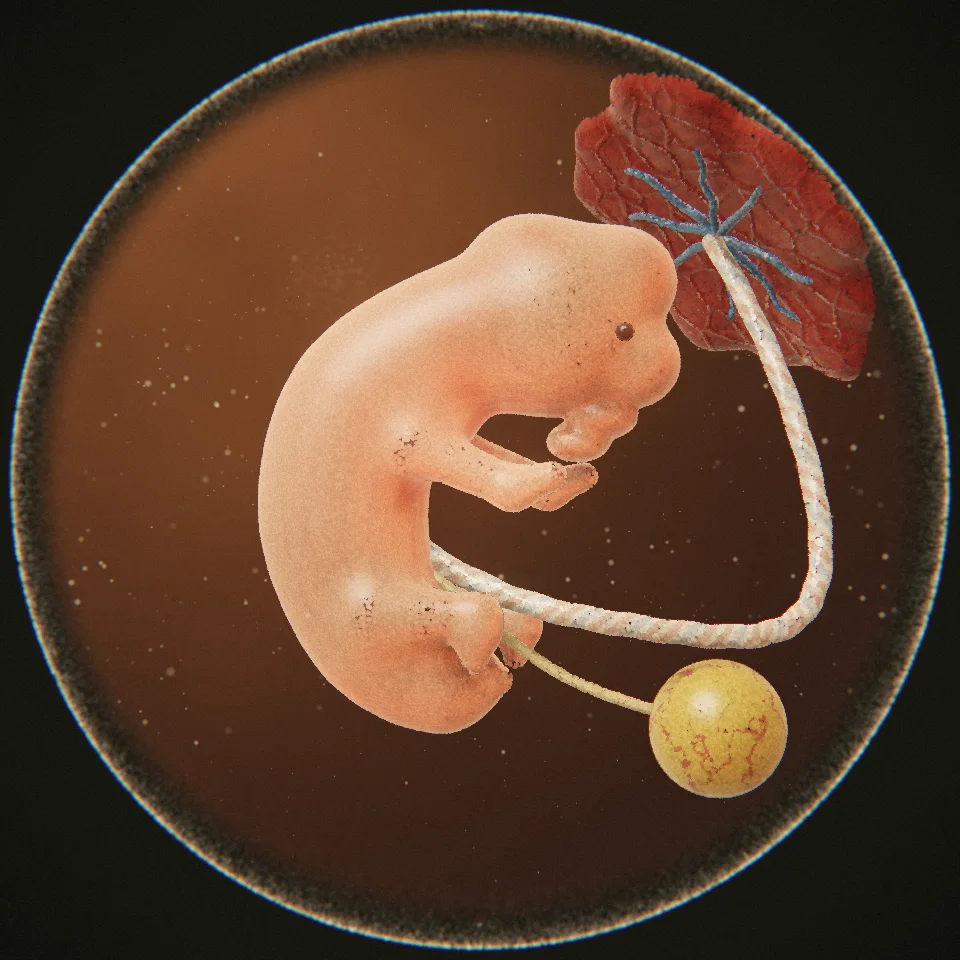
The embryo is about 10 mm long from head to bottom, roughly the size of a grape. The brain is growing faster than the rest of the body, which gives it a large forehead. The brain and spinal cord are taking shape at a remarkable pace: around 100 new brain cells form every minute1.
Small dimples are appearing on the face where the nose and ears will be. The eyelids are starting to grow and cover the eyes1.
The limb buds are beginning to form cartilage, which will later become the bones of the arms and legs. The arm buds are getting longer, and their flattened ends will soon become tiny hands1.
Your body
There is now more blood pumping around your body than there was 7 weeks ago. Over the course of pregnancy, the volume can rise by up to 50%. This extra blood carries the oxygen and nutrients your baby needs to your womb1.
That is why you may feel thirstier than usual. The NHS suggests drinking about 8 medium glasses of fluid a day: water, fruit tea, fruit juice, or skimmed or semi-skimmed milk1.
Your womb is now about the size of a lemon. If this is your first pregnancy, you probably won’t look pregnant until around week 12. If you have had a baby before, it may show earlier, because your womb and stomach muscles have already been stretched1.
This week can feel hard if you are dealing with sickness, tiredness and mood swings. Other common symptoms include1:
- A metallic taste in your mouth and sore breasts.
- Headaches.
- New food and drink likes and dislikes, and a much stronger sense of smell.
- A white, milky vaginal discharge.
- Light spotting or cramps a bit like period pains.
- Dark patches on your face, known as chloasma.
- Thicker, shinier hair.
- Bloating.
Health and tips
Your first appointment. If you haven’t yet, let your practice know you’re pregnant and book an appointment with a midwife or doctor. In the UK, the booking appointment usually takes place between weeks 8 and 12 and lasts about an hour. You can talk about your options for pregnancy and birth, and you’ll be offered screening for infectious diseases and conditions such as Down’s syndrome1.
Your due date. Any date you work out now is only a guide. In the UK, a more accurate date comes from the dating scan, done between 8 and 14 weeks1.
Vitamins. You’re advised to take 400 micrograms of folic acid a day until at least week 12, as it helps form your baby’s nervous system. Between October and early March, the NHS also suggests considering a daily 10 microgram vitamin D supplement, because sunlight isn’t enough to make it1.
Smoking, alcohol and caffeine. Try to stop smoking and give up alcohol, and go easy on tea, coffee and anything else with caffeine. Your midwife or doctor can help1.
Sexually transmitted infections. If you think you or your partner could have an STI, get checked, as it could affect your baby’s development. You can talk to your midwife or doctor, or visit a sexual health clinic1.
For your partner or supporter
Up to around week 14, it’s common for her to feel very tired and sick, and she may only want to sleep. She may also be irritable about things that seem small to you. After about 14 weeks, many pregnant women find much of their energy returns2.
If you are her partner or the person supporting her, now is a good time to start sharing the housework, if you don’t already. Cooking and carrying heavy shopping are two areas where you can really help2.
When to get help
Don’t ignore strange symptoms, such as feeling itchy all over. They are often normal, but check with your midwife or doctor1. Talk to them too if you can’t keep food down3.
If you have spotting or light bleeding, call your midwife or maternity unit straight away. Get urgent help if the bleeding is heavy, if you have severe tummy or shoulder pain, or if you feel dizzy or faint4.
If you have a long-term health condition, tell your specialist you’re pregnant as soon as possible, and don’t stop any regular medication without talking to them first1.
If you’re feeling anxious or low, say so: they can point you towards the support you need1.
Frequently asked questions
How big is the fetus at week 7 of pregnancy?
According to the NHS, it is about 10 mm, head to bottom.
When is the due date confirmed?
At the first-trimester scan. In the UK, this happens between weeks 8 and 14.
How much should I drink during pregnancy?
The NHS suggests about 8 medium glasses a day, such as water, fruit tea, fruit juice or skimmed or semi-skimmed milk.
Sources
- National Health Service (NHS), Regne Unit. 7 weeks pregnant guide. NHS Best Start in Life.
- NHS 111 Wales. Dads and partners. 111.wales.nhs.uk.
- National Health Service (NHS), Regne Unit. 6 weeks pregnant guide. NHS Best Start in Life.
- National Health Service (NHS), Regne Unit. Vaginal bleeding in pregnancy. nhs.uk.
- Hospital Clínic de Barcelona. Pregnancy and Childbirth: alarm signs. clinicbarcelona.org.