Everything here is written from scientific sources. If you have any doubts, check the original sources.
The stages of treatment
The UK fertility regulator, the HFEA, describes an IVF cycle, which takes 3 to 6 weeks, as follows1:
- Ovarian stimulation. Medication makes the ovaries produce eggs.
- Monitoring. Your team tracks the response with blood tests or scans.
- Egg collection. Eggs are collected under sedation or general anaesthetic, in a procedure of about half an hour.
- Sperm sample. From a partner or a donor.
- Preparing the womb lining. With medication, usually given vaginally or rectally.
- Fertilisation. Eggs and sperm are brought together in the laboratory.
- Embryo monitoring. The embryos are checked as they develop.
- Embryo transfer. Two to five days after fertilisation, usually without anaesthetic.
How an embryo develops
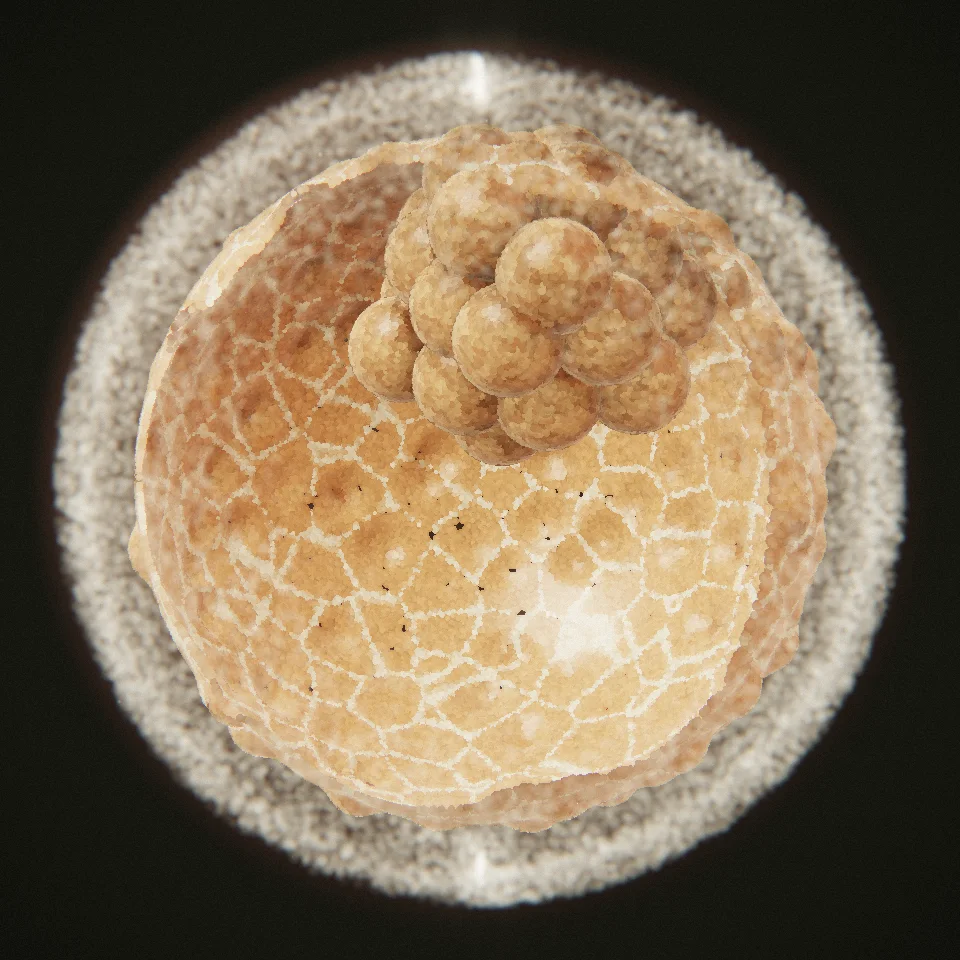
Laboratories assess embryos at set times. The Istanbul consensus, included in the ESHRE atlas, expects 2 cells on day 1, 4 on day 2 and 8 on day 32,3. Around day 5, the embryo reaches the blastocyst stage.
How many embryos to transfer
The ESHRE guideline concludes that no clinical or embryological factor on its own justifies transferring two embryos instead of one4. Transferring more than one raises the risk of multiple pregnancy, with complications for the mother and babies5. Remaining embryos can be frozen and used later5.
ESHRE states that only single embryo transfer should be performed for patients under 38. It also considers that patients over 38 benefit from it5.
What the outcomes show
These are HFEA figures for the UK in 2023, using the patient’s own eggs. The data are preliminary and may be underestimated6.
| Per embryo transferred | Result |
|---|---|
| Births, fresh embryo (average) | 25% |
| Births, fresh embryo, aged 18 to 34 | 35% |
| Births, fresh embryo, aged 43 to 44 | 5% |
| Births, frozen embryo (average) | 33% |
These figures describe one country in one year. They do not predict the outcome for a person or a clinic. ESHRE recommends also looking at the cumulative rate, which takes into account all the embryos from one cycle5.
Risks
The HFEA lists these main risks1:
- Ovarian hyperstimulation syndrome, a severe reaction to fertility drugs.
- Multiple pregnancy, which can cause serious health problems for the mother and babies.
- Ectopic pregnancy.
- Birth defects, which are rare and still being researched.
After the transfer
Your clinic will give you a date for your pregnancy test. Testing earlier may give a false result1.
If the test is positive, your due date is worked out from the age of the embryo and the day of transfer: 263 days later for a day 3 embryo, and 261 for a day 5 embryo7. You can use the due date calculator.
Frequently asked questions
How long does an IVF cycle take?
According to the HFEA, 3 to 6 weeks. Most cycles take 4 to 6 weeks, or about 3 if the suppression stage is skipped.
How many embryos are transferred?
The ESHRE guideline finds that no clinical or embryological factor on its own justifies transferring two embryos instead of one. Discuss the decision with your team.
Sources
- Human Fertilisation and Embryology Authority (HFEA). In vitro fertilisation (IVF). hfea.gov.uk.
- European Society of Human Reproduction and Embryology (ESHRE). Atlas of Human Embryology: cell numbers. atlas.eshre.eu.
- Alpha Scientists in Reproductive Medicine; ESHRE Special Interest Group of Embryology. The Istanbul consensus workshop on embryo assessment: proceedings of an expert meeting. Hum Reprod 2011;26(6):1270-1283.
- European Society of Human Reproduction and Embryology (ESHRE). ESHRE guideline: number of embryos to transfer during IVF/ICSI. Hum Reprod 2024;39(4):647-657.
- European Society of Human Reproduction and Embryology (ESHRE). Number of embryos to transfer during IVF/ICSI: patient leaflet. Versió 2023.
- Human Fertilisation and Embryology Authority (HFEA). Fertility treatment 2023: trends and figures. Regne Unit, juny de 2025.
- American College of Obstetricians and Gynecologists (ACOG). Committee Opinion No 700: Methods for Estimating the Due Date (reafirmada el 2025). Obstet Gynecol 2017;129(5):e150-e154.