Everything here is written from scientific sources. If you have any doubts, check the original sources.
How it is done
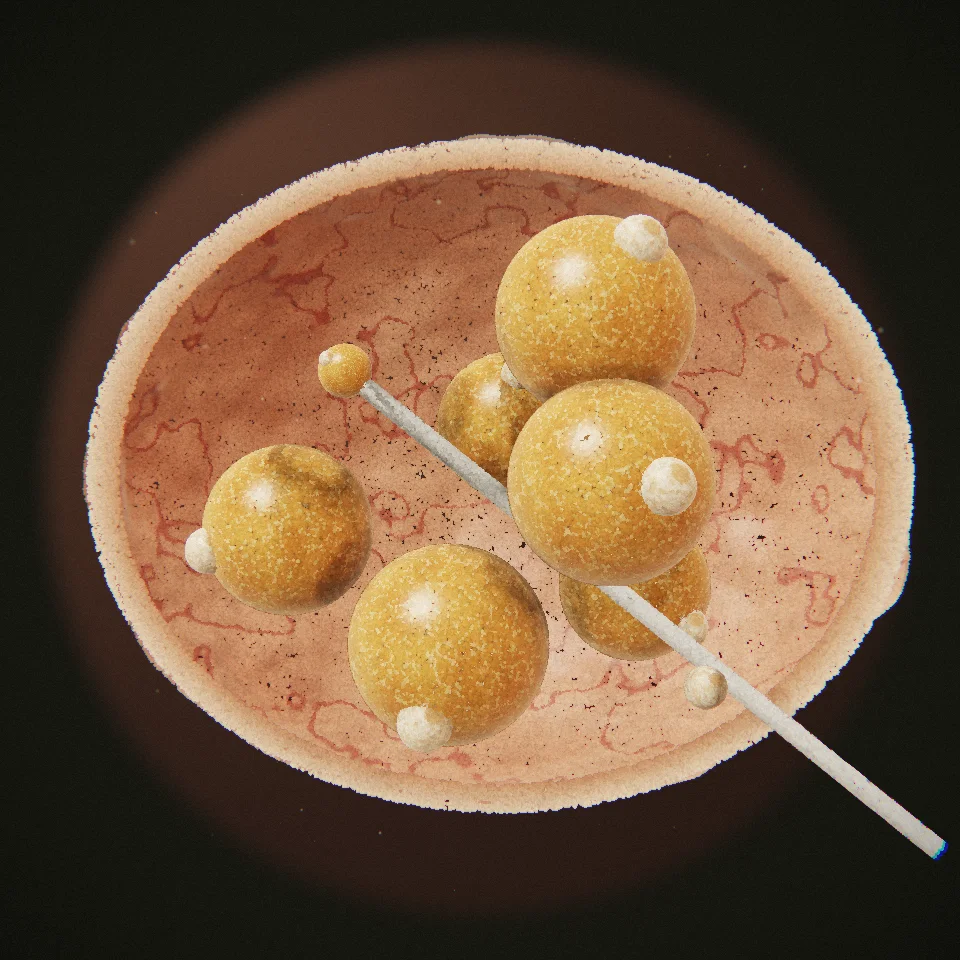
A doctor collects the eggs using a needle inserted through the vagina1. The NHS says around 20 minutes and the HFEA around half an hour, under sedation or general anaesthetic1,2. Meanwhile, a partner usually gives a sperm sample, or donor sperm is prepared1.
Afterwards
You may feel a little sore or bruised2. The next day, the clinic usually calls to say how many embryos have formed1.
If a transfer is planned, ESHRE advises starting progesterone between the evening of egg collection and day 3 afterwards3. Follow your clinic’s plan.
When everything is frozen
There is not always a transfer in the same cycle. In the Spanish registry for 2023, 39.2% of collections with own eggs had no transfer because all embryos were frozen4. See frozen embryos.
When to get advice
Serious problems are rare, but the HFEA mentions infection, bleeding and bowel perforation5. Strong symptoms of hyperstimulation usually appear the week after collection: a swollen, painful stomach, nausea or vomiting, shortness of breath, faintness and passing little urine. If so, call your clinic straight away5.
Next, see what happens in the lab.
Frequently asked questions
Does egg collection hurt?
It is done under sedation or general anaesthetic. Afterwards you may feel a little sore or bruised, according to the HFEA.
How long does egg collection take?
The NHS says around 20 minutes and the HFEA around half an hour.
Sources
- National Health Service (NHS), Regne Unit. IVF. nhs.uk.
- Human Fertilisation and Embryology Authority (HFEA). In vitro fertilisation (IVF). hfea.gov.uk.
- European Society of Human Reproduction and Embryology (ESHRE). ESHRE guideline: ovarian stimulation for IVF/ICSI. Hum Reprod Open 2020;2020(2):hoaa009.
- Sociedad Española de Fertilidad (SEF). Registro Nacional de Actividad 2023: informe estadístico de técnicas de reproducción asistida. Registro SEF.
- Human Fertilisation and Embryology Authority (HFEA). Risks of fertility treatment. hfea.gov.uk.