Everything here is written from scientific sources. If you have any doubts, check the original sources.
How it is done
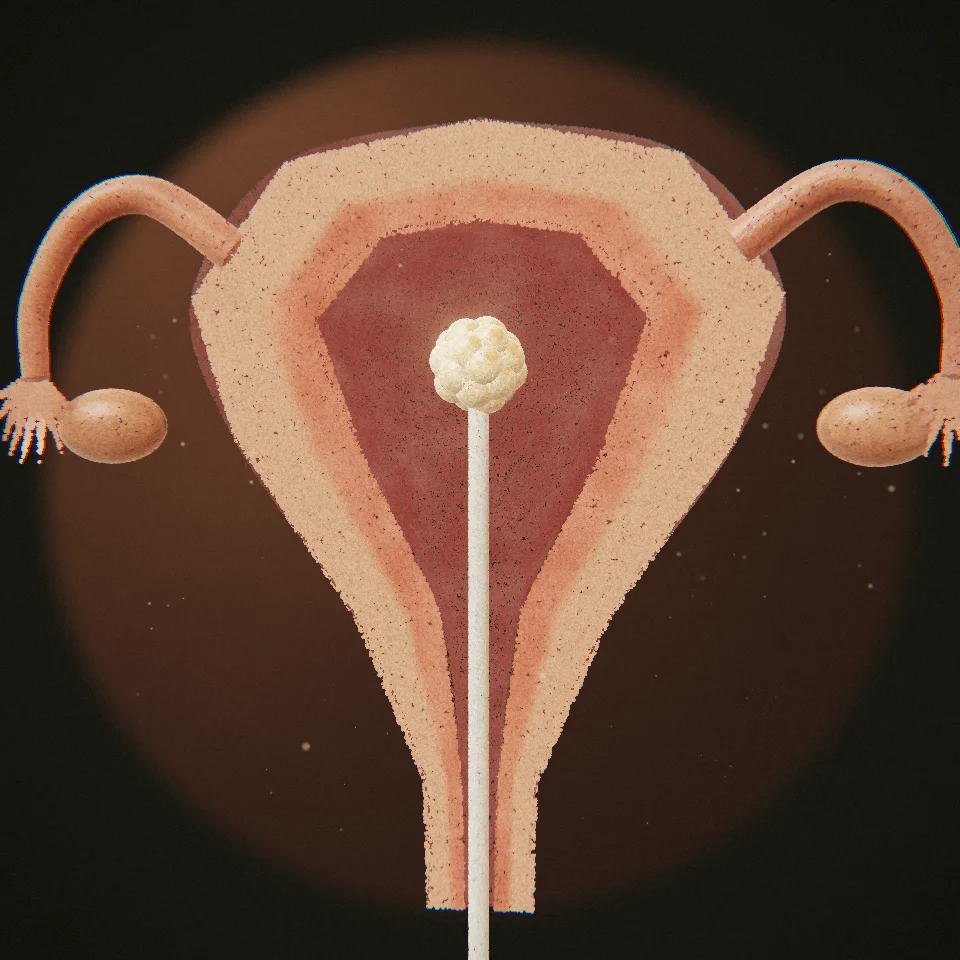
Two to five days after fertilisation1, the embryo is placed in the womb through a thin tube inserted through the vagina2. An anaesthetic is usually not needed1.
The expert technical consensus treats transabdominal ultrasound guidance as the gold standard. It asks patients to arrive with a full bladder, which straightens the cervix and improves the view3. A meta-analysis of 24 trials found more clinical pregnancies with ultrasound guidance than with clinical touch alone (RR 1.27)4. Afterwards, the embryologist checks that no embryo is left in the catheter3.
How many embryos
The ESHRE guideline concludes that no clinical or embryological factor on its own justifies transferring two embryos instead of one5. In Spain in 2023, 74.2% of fresh transfers used a single embryo, with an average of 1.3 embryos6.
What about afterwards?
Rest has not been shown to help: a meta-analysis of six trials found fewer clinical pregnancies with bed rest than with immediate mobilisation or no rest (RR 0.86)4. Follow your clinic’s advice.
Now the two-week wait begins.
Frequently asked questions
Do I need to rest after embryo transfer?
A meta-analysis of six trials found fewer clinical pregnancies with bed rest than without. Follow your clinic's advice.
How many embryos are transferred?
ESHRE finds that no factor on its own justifies transferring two instead of one. In Spain, 74.2% of transfers in 2023 used a single embryo.
Sources
- Human Fertilisation and Embryology Authority (HFEA). In vitro fertilisation (IVF). hfea.gov.uk.
- National Health Service (NHS), Regne Unit. IVF. nhs.uk.
- ESHRE, grup de treball sobre transferència embrionària. Evidence and consensus on technical aspects of embryo transfer. Hum Reprod Open 2022;2022(4):hoac038.
- Hum Reprod Update (revisió sistemàtica). Interventions to optimize embryo transfer in women undergoing assisted conception: a comprehensive systematic review and meta-analyses. Hum Reprod Update 2022;28(4):480-500.
- European Society of Human Reproduction and Embryology (ESHRE). ESHRE guideline: number of embryos to transfer during IVF/ICSI. Hum Reprod 2024;39(4):647-657.
- Sociedad Española de Fertilidad (SEF). Registro Nacional de Actividad 2023: informe estadístico de técnicas de reproducción asistida. Registro SEF.