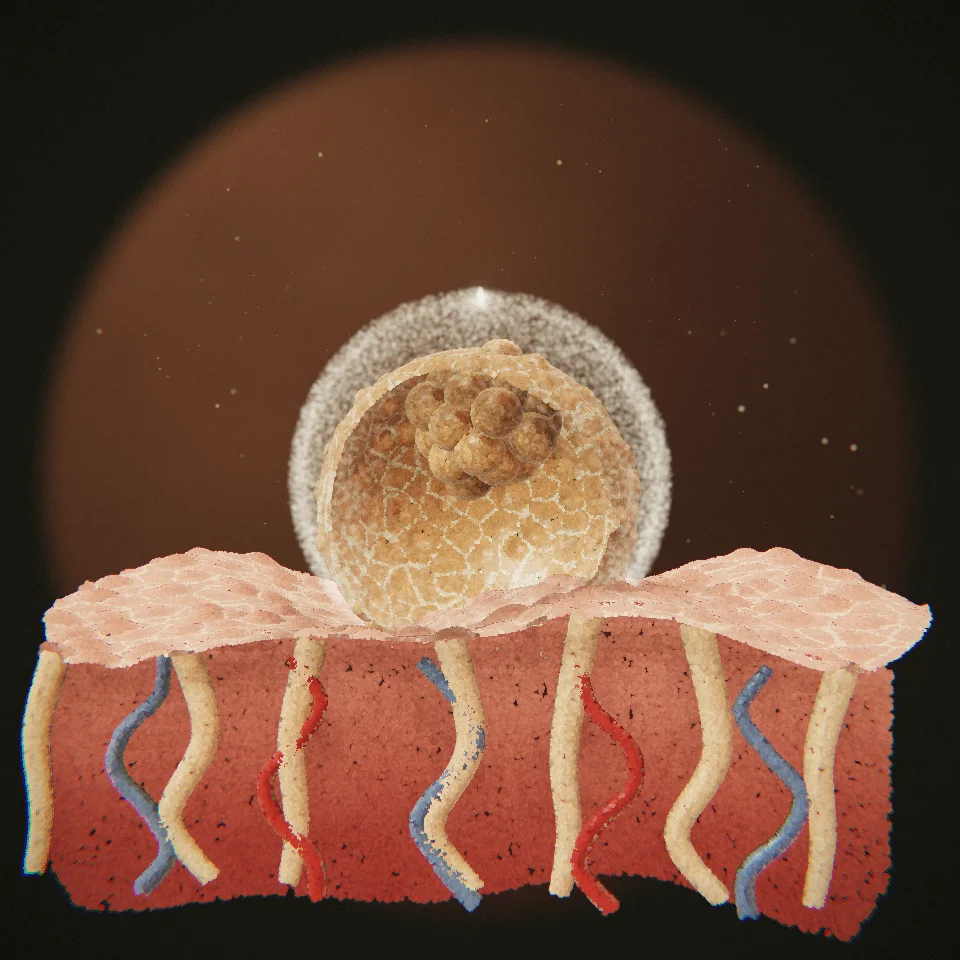
Everything here is written from scientific sources. If you have any doubts, check the original sources.
How long it lasts
The NHS describes a pregnancy test around 16 days after embryo transfer1. Each clinic sets its own date, which may vary with the day of transfer.
Medication
ESHRE recommends progesterone for luteal phase support, continued at least until the day of the test2. Do not change or stop it without talking to your clinic.
Daily life
Bed rest has not been shown to help: a meta-analysis of six trials found fewer clinical pregnancies with rest than without3.
Don’t test early
Testing before your date may give a false result4. The reliable result comes from the test on your given date.
When to call
Contact your clinic straight away if you have symptoms of hyperstimulation: a swollen, painful stomach, nausea or vomiting, shortness of breath, faintness or passing little urine5.
Also get advice for pain on one side of your lower abdomen, vaginal bleeding or brown discharge, which can be signs of ectopic pregnancy5.
Coping with the wait
IVF affects you emotionally and physically. The NHS recommends counselling for anyone having IVF, and your clinic should offer it before, during and after treatment1.
Frequently asked questions
Can I take a pregnancy test before the date?
The HFEA warns that testing early may give a false result. Wait for your clinic's date.
When do I stop progesterone?
ESHRE advises continuing at least until the day of the test. Do not stop it on your own.
Sources
- National Health Service (NHS), Regne Unit. IVF. nhs.uk.
- European Society of Human Reproduction and Embryology (ESHRE). ESHRE guideline: ovarian stimulation for IVF/ICSI. Hum Reprod Open 2020;2020(2):hoaa009.
- Hum Reprod Update (revisió sistemàtica). Interventions to optimize embryo transfer in women undergoing assisted conception: a comprehensive systematic review and meta-analyses. Hum Reprod Update 2022;28(4):480-500.
- Human Fertilisation and Embryology Authority (HFEA). In vitro fertilisation (IVF). hfea.gov.uk.
- Human Fertilisation and Embryology Authority (HFEA). Risks of fertility treatment. hfea.gov.uk.