Everything here is written from scientific sources. If you have any doubts, check the original sources.
Conventional IVF or ICSI
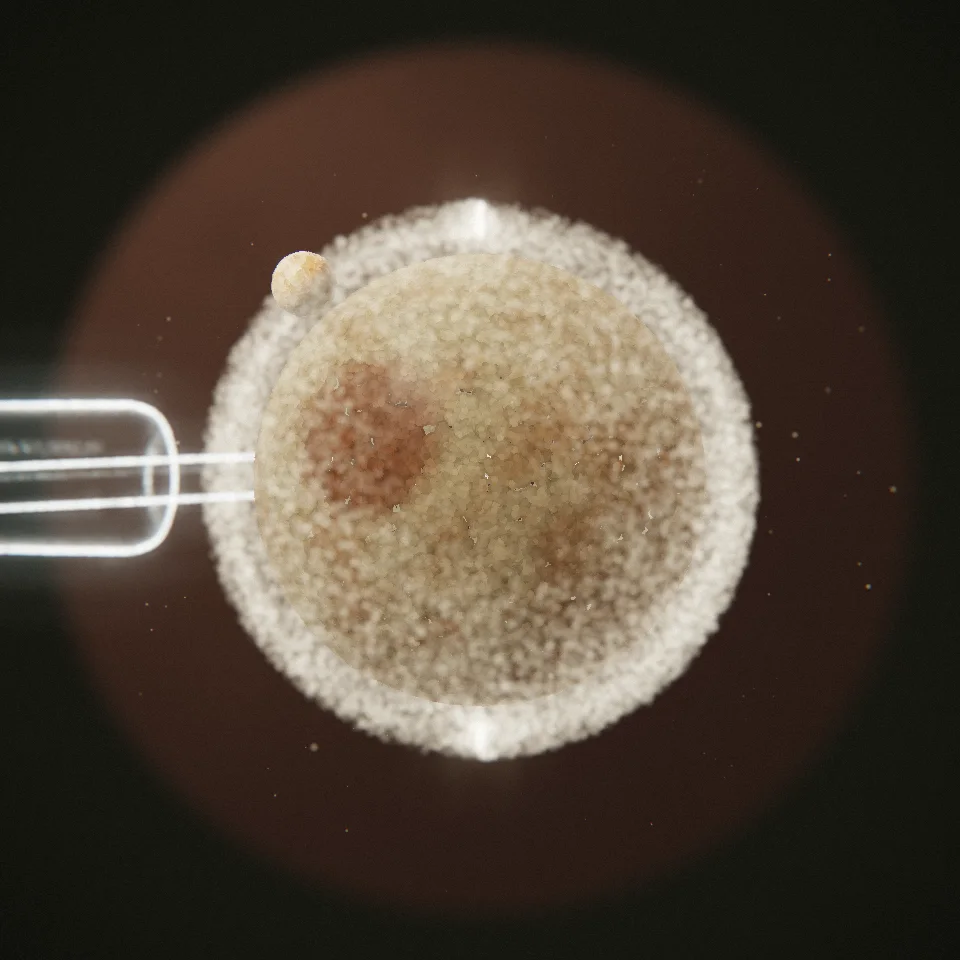
In conventional IVF, eggs and sperm are mixed and left to fertilise. In ICSI, an embryologist injects a single sperm into each egg1.
The HFEA suggests ICSI for very low sperm counts or poor movement, few eggs fertilising in a previous IVF cycle, or surgically collected sperm. It does not recommend it for infertility unrelated to male factors1. Even so, it was the most used technique in Spain in 2023, at 86.2%2.
Sons of fathers with genetic infertility may inherit it, so genetic counselling can be useful1.
How an embryo develops
Embryos are monitored for two to six days before selection3. According to the Istanbul consensus, included in the ESHRE atlas4,5:
| Day | Expected development |
|---|---|
| Day 1 | 2 cells |
| Day 2 | 4 cells |
| Day 3 | 8 cells |
Around day 5, the embryo reaches the blastocyst stage5.
Additional techniques
Some clinics offer add-ons such as time-lapse incubation. The HFEA rates their effectiveness in treatment add-ons.
The next step is embryo transfer.
Frequently asked questions
What is the difference between IVF and ICSI?
In conventional IVF, eggs and sperm are mixed. In ICSI, a single sperm is injected into each egg.
When is ICSI recommended?
Mainly for male-factor causes, such as a very low sperm count. The HFEA does not recommend it for infertility unrelated to male factors.
Sources
- Human Fertilisation and Embryology Authority (HFEA). Intracytoplasmic sperm injection (ICSI). hfea.gov.uk.
- Sociedad Española de Fertilidad (SEF). Registro Nacional de Actividad 2023: informe estadístico de técnicas de reproducción asistida. Registro SEF.
- Human Fertilisation and Embryology Authority (HFEA). In vitro fertilisation (IVF). hfea.gov.uk.
- European Society of Human Reproduction and Embryology (ESHRE). Atlas of Human Embryology: cell numbers. atlas.eshre.eu.
- Alpha Scientists in Reproductive Medicine; ESHRE Special Interest Group of Embryology. The Istanbul consensus workshop on embryo assessment: proceedings of an expert meeting. Hum Reprod 2011;26(6):1270-1283.