Everything here is written from scientific sources. If you have any doubts, check the original sources.
Your baby this week
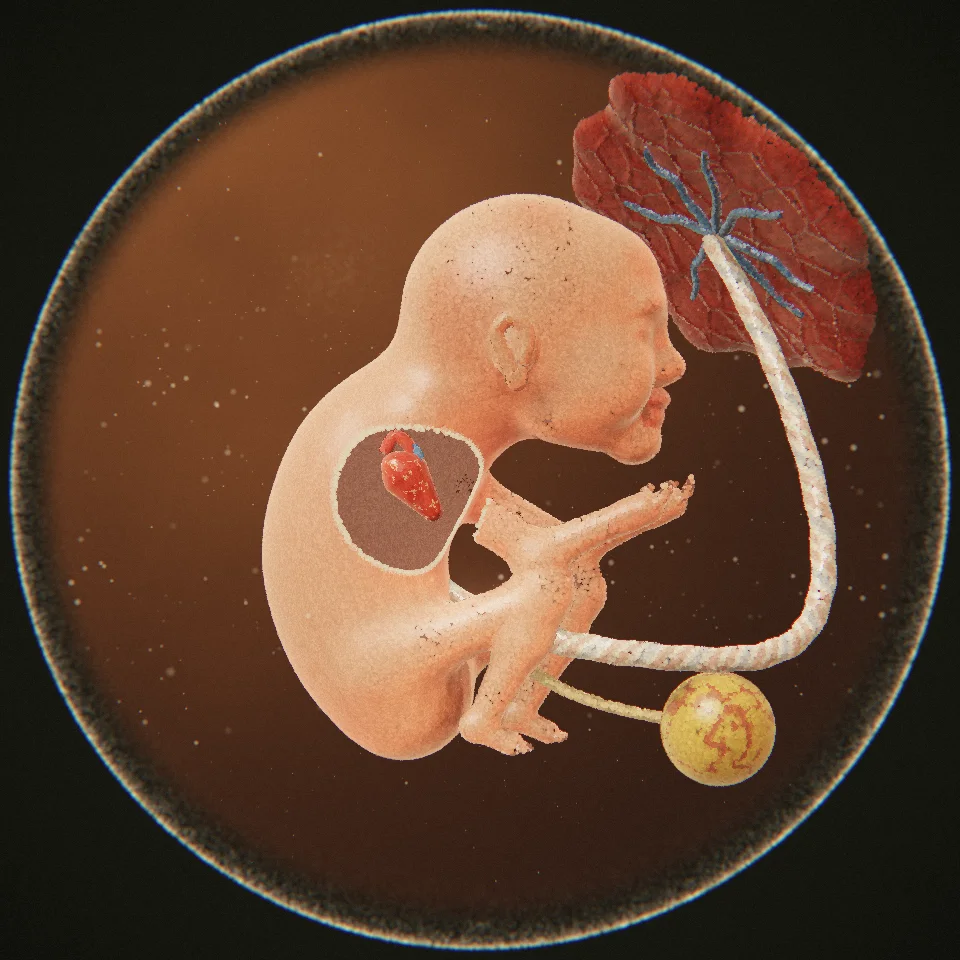
It is about 30 mm long from head to bottom, roughly the size of a small apricot. It makes jerky movements that can already be seen on a scan1.
Your baby is going through another huge growth spurt. The head is still too big for the body, but the face is more recognisably in proportion. The eyes are half closed but can react to light1.
The ears are starting to form, the mouth now has a delicate upper lip and the nose has 2 little nostrils. The jaw is taking shape and already holds tiny versions of the milk teeth1.
The heart beats very fast. The NHS gives a figure of around 170 beats a minute in weeks 9 and 102. On its page for this week it even says 180, about 3 times your heart rate1.
The fetal stage begins at the end of week 10, 8 weeks after fertilisation3,4. The NHS, more loosely, uses the word fetus from around week 85.
Your body
You’re nearly at the end of your first trimester. In the second, you’ll probably have much more energy and the signs of early pregnancy will gradually fade1.
You may be struggling to do up your jeans. Your womb is now about the size of a large orange1.
It’s common to feel bloated, burp or pass wind. Hormones are behind it: progesterone relaxes the muscles of your womb so it can grow with your baby, but it also loosens the muscles of your digestive tract, which can lead to heartburn1.
Other common symptoms this week include1:
- Extreme tiredness, nausea and mood swings.
- Indigestion and heartburn.
- Headaches and dizziness.
- A metallic taste in your mouth and sore breasts.
- Greasier, spotty skin.
- Light spotting or cramps a bit like period pains.
Health and tips
Your booking appointment. Around now you may have your booking appointment with a midwife. You’ll be asked lots of questions about your health and medical history, and you can ask as many as you like too1.
Beating the bloating. Changing how you eat can ease bloating and burping. The NHS recommends1:
- Eating about 6 small meals and avoiding eating late at night.
- Eating slowly and sipping fluids.
- Avoiding smoking and alcohol.
- Taking a short stroll after meals.
Some people find coffee or rich, spicy and fatty foods make symptoms worse1.
Exercising safely. Exercise is safe in pregnancy, and the aim is 150 minutes of moderate activity a week, including 2 sessions of muscle strengthening. Tell your trainer you’re pregnant, drink water, try to keep cool and stop if you feel unwell. Avoid sports with a risk of falling or being hit in the tummy, such as hockey or mountain biking, as well as scuba diving, and don’t exercise on an empty stomach6.
Vitamins. Keep taking folic acid until at least week 12. Between October and early March, also consider a daily 10 microgram vitamin D supplement1.
For your partner or supporter
Sex drive often changes in pregnancy, and there’s usually no medical reason to avoid sex. Bear in mind that her breasts may be very tender in the early weeks, that you shouldn’t have sex if there’s any bleeding or pain, and that you may need to find positions where she is comfortable7.
If you’re not having sex, find other ways of being close, and talk about it. If you feel uncomfortable about her changing shape, talk about that too, but gently: she may feel uneasy about her body herself and be hurt if she thinks you don’t like how she looks7.
When to get help
If any symptoms are worrying you, talk to your midwife or doctor1.
If you bleed, call your midwife or maternity unit straight away. Get urgent help if the bleeding is heavy, if you have severe tummy or shoulder pain, or if you feel dizzy or faint8.
Frequently asked questions
How big is the fetus at week 10 of pregnancy?
According to the NHS, it is about 30 mm, head to bottom.
How can bloating in pregnancy be reduced?
Small meals, eating slowly, avoiding late meals and a short walk afterwards can help.
Is it safe to have sex during pregnancy?
There's usually no medical reason to avoid it. Don't have sex if there is any bleeding or pain, and get it checked.
Sources
- National Health Service (NHS), Regne Unit. 10 weeks pregnant guide. NHS Best Start in Life.
- National Health Service (NHS), Regne Unit. 28 weeks pregnant guide. NHS Best Start in Life.
- MSD Manual, versió per al públic. Stages of Development of the Fetus. msdmanuals.com.
- American College of Obstetricians and Gynecologists (ACOG). How Your Fetus Grows During Pregnancy (FAQ156). Darrera revisió: març de 2026.
- National Health Service (NHS), Regne Unit. 8 weeks pregnant guide. NHS Best Start in Life.
- National Health Service (NHS), Regne Unit. Exercise in pregnancy. nhs.uk.
- NHS 111 Wales. Dads and partners. 111.wales.nhs.uk.
- National Health Service (NHS), Regne Unit. Vaginal bleeding in pregnancy. nhs.uk.
- Hospital Clínic de Barcelona. Pregnancy and Childbirth: alarm signs. clinicbarcelona.org.