Everything here is written from scientific sources. If you have any doubts, check the original sources.
Your baby this week
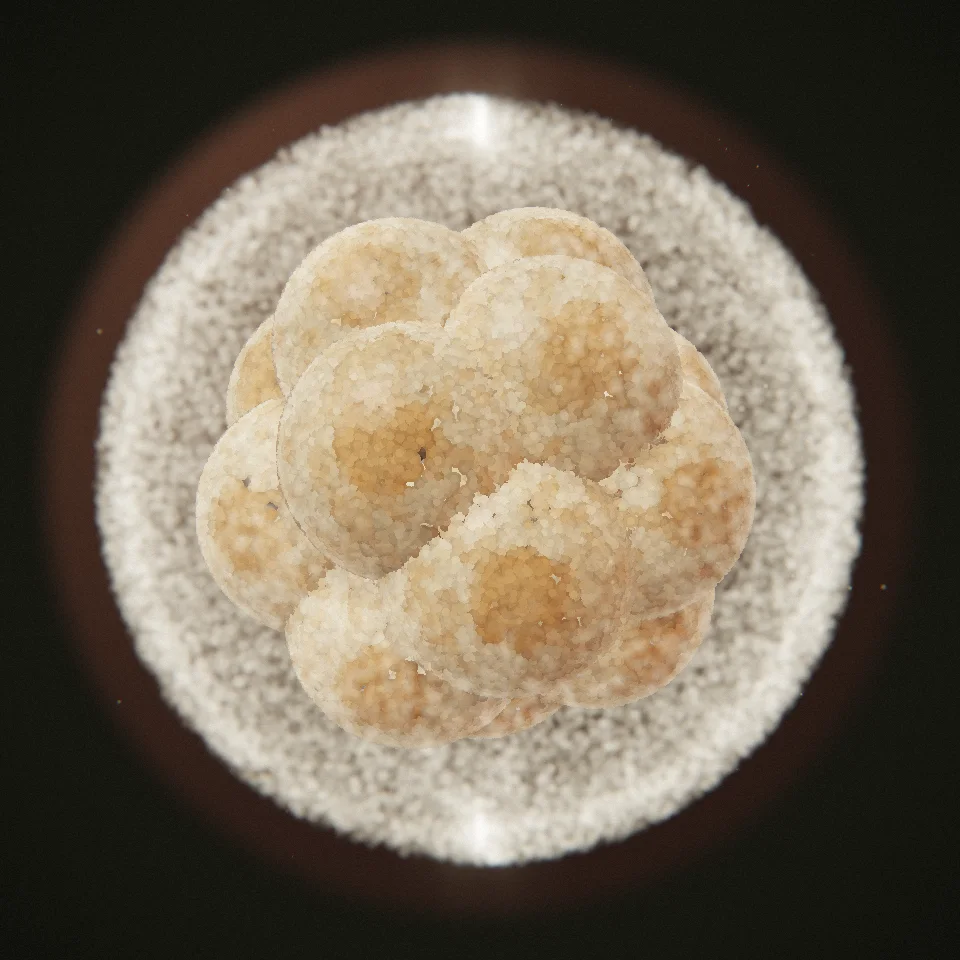
The zygote reaches the uterus within 3 to 5 days. There the cells keep dividing until they form a hollow ball called a blastocyst1.
About 6 days after fertilisation, the blastocyst attaches to the wall of the uterus, usually near the top. This is implantation, which is complete by about day 9 or 101.
The blastocyst already has two parts. The inner cells will become the embryo, and the outer cells burrow into the wall of the uterus and will become the placenta1. The placenta makes hormones that keep the pregnancy going. One of them is human chorionic gonadotrophin (hCG), which stops the ovaries releasing more eggs and makes them produce oestrogen and progesterone1.
As it implants, the embryo forms its first structures: by about days 10 to 12 after fertilisation the amniotic sac has formed, and at around day 16 the heart and major blood vessels start to develop1.
Your body
At first you may not notice anything. When hCG starts to rise, the first pregnancy symptoms may appear2.
Some people have light spotting as the fertilised egg burrows into the uterus2. This is known as implantation bleeding3.
Pregnancy tests pick up changes in your urine from week 3 or 44. Some home tests can do it from about three and a half weeks2, so this week may still be too early.
If you’re having IVF
In IVF, the embryo is transferred two to five days after fertilisation5. It is placed in the uterus with a thin tube passed through the vagina6, and you usually do not need an anaesthetic5. Beforehand, medicine prepares the lining of the womb, often as a gel or pessary that you insert into the vagina or rectum5.
Embryos are monitored for two to six days before one is chosen5. IVF laboratories expect 2 cells on day 1, 4 on day 2 and 8 on day 37.
Transferring two embryos raises the chance of twins or triplets, which carries health risks. That is why the remaining good embryos are usually frozen5. ESHRE finds that no factor on its own justifies transferring two embryos instead of one8. There is more detail on embryo transfer.
After the transfer, the clinic gives you a date for the pregnancy test, about 16 days later6. Test on the date you are given: testing earlier may give a false result5. You can follow the days with the two-week wait countdown.
Health and tips
Folic acid. The NHS recommends 400 micrograms a day until at least week 12, as it helps your baby’s nervous system form2.
Medicines. The organs form over the coming weeks, and this is when the embryo is most vulnerable to medicines, drugs, viral infections and radiation. During pregnancy, only take medicines that are essential and known to be safe, and avoid live-virus vaccines1.
Smoking, alcohol and caffeine. Do your best to stop smoking and drinking alcohol, and go easy on tea, coffee and drinks with caffeine2.
Vitamin D. It helps keep bones and muscles healthy. The NHS suggests considering a daily 10-microgram supplement between October and early March, when sunlight is not enough to make it2.
The wait. The days until the test can feel long. IVF takes a high emotional toll, and getting support is important5.
For your partner or supporter
If you are the partner or the person supporting her, being there matters. Go with her to appointments when she is worried, or talk it through when she gets home9.
In IVF, counselling is recommended for anyone having treatment, and the clinic should offer it to you before, during and after6.
If the test is negative, give yourselves time to recover and look for support6,10. Many experts recommend waiting a couple of months before trying again5.
When to get help
Light spotting can happen at this stage2, but bleeding should always be checked3. Get urgent help if the bleeding is heavy, if you have severe tummy or shoulder pain, or if you feel dizzy or faint3.
If you are having IVF, call your clinic if you have pain and bloating in your tummy, feel or are sick, or feel faint. Go to the emergency department if you have difficulty breathing or tummy pain low down on one side. These can be signs of ovarian hyperstimulation or an ectopic pregnancy6. There is more detail on the risks of IVF.
Frequently asked questions
When does the embryo implant?
Implantation begins about 6 days after fertilisation and is complete by about day 9 or 10.
Can you feel implantation?
Usually not. Some people have light spotting, but if you bleed, get it checked.
Sources
- MSD Manual, versió per al públic. Stages of Development of the Fetus. msdmanuals.com.
- National Health Service (NHS), Regne Unit. 4 weeks pregnant guide. NHS Best Start in Life.
- National Health Service (NHS), Regne Unit. Vaginal bleeding in pregnancy. nhs.uk.
- National Health Service (NHS), Regne Unit. 5 weeks pregnant guide. NHS Best Start in Life.
- Human Fertilisation and Embryology Authority (HFEA). In vitro fertilisation (IVF). hfea.gov.uk.
- National Health Service (NHS), Regne Unit. IVF. nhs.uk.
- European Society of Human Reproduction and Embryology (ESHRE). Atlas of Human Embryology: cell numbers. atlas.eshre.eu.
- European Society of Human Reproduction and Embryology (ESHRE). ESHRE guideline: number of embryos to transfer during IVF/ICSI. Hum Reprod 2024;39(4):647-657.
- NHS 111 Wales. Dads and partners. 111.wales.nhs.uk.
- Human Fertilisation and Embryology Authority (HFEA). Coping if treatment doesn’t work. hfea.gov.uk.