Everything here is written from scientific sources. If you have any doubts, check the original sources.
Your baby this week
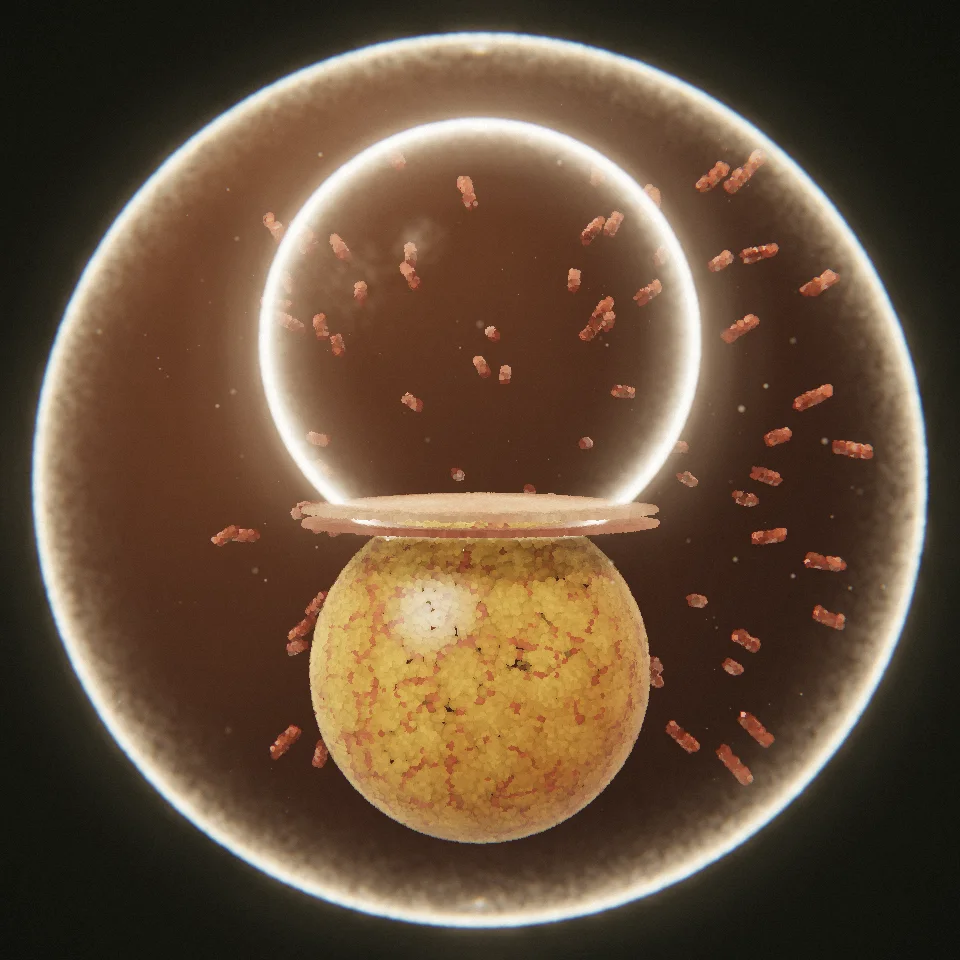
The embryo is about 2 mm long, like a poppy seed, and is growing quickly in your womb1.
It is protected by the amniotic sac, which is filled with cushioning fluid. It is attached to a tiny yolk sac that gives it all the nourishment it needs for now1. The amniotic fluid gives it room to grow freely and helps protect it from injury2.
The outer cells of the blastocyst form the placenta and the amniotic sac, and the inner cells form the embryo2. This outer layer will later give your baby oxygen and nutrients1.
Your body
You probably do not look pregnant yet. If it is your first pregnancy, you might not start showing until at least week 12. If you have been pregnant before, you may show sooner, as the muscles of your uterus and tummy have already been stretched1.
To start with, you may not have any symptoms. When the pregnancy hormone, human chorionic gonadotrophin, starts to kick in, these may appear during the first trimester1:
- A missed period, often one of the first signs.
- A metallic taste in your mouth and sore breasts.
- Nausea, at any time of day, and tiredness.
- New food likes and dislikes, and a sharper sense of smell.
- Needing to pee more often, and a milky white vaginal discharge.
- Light spotting as the fertilised egg burrows into your uterus.
- Cramps a bit like period pains.
- Darker patches of skin on your face, known as chloasma.
- Thicker, shinier hair, and bloating.
If you think you could be pregnant but have not noticed any symptoms, you still might be. Every pregnancy is different1.
When to take a pregnancy test
Some home tests can detect pregnancy from about three and a half weeks, with 99% accuracy according to the NHS1.
After IVF, wait for the date your clinic gives you, because testing earlier may give a false result3. The NHS puts it at about 16 days after the transfer4. There is more on the beta hCG test.
Health and tips
Your first appointment. Once you know, make an appointment with a midwife or doctor. In the UK, the booking appointment usually takes place between weeks 8 and 12 and lasts about an hour. You are offered screening tests for infectious diseases and conditions such as Down’s syndrome1. For a first pregnancy, the NHS expects around 10 appointments and 2 scans, and suggests asking whether you can see the same carer throughout1.
Folic acid. You are advised to take 400 micrograms a day until at least week 12. It helps your baby’s nervous system form and offers some protection from conditions such as spina bifida1.
Smoking, alcohol and caffeine. Do your best to stop smoking and drinking alcohol, and go easy on tea, coffee and anything else with caffeine1.
Eating and moving. There is no need to eat for two: a varied, balanced diet with plenty of fruit and vegetables is enough. The recommendation is 150 minutes of exercise a week, and you can start with a 10-minute brisk walk each day1.
Long-term conditions. If you have one, tell your specialist you are pregnant as soon as possible, and do not stop any regular medicine without talking to them first1.
For your partner or supporter
Up to around week 14, pregnant women often feel very tired and sick. Certain smells and tastes can make her nauseous, and she may only want to sleep or be irritable about things that seem small to you5.
If you are the partner or the person supporting her, you can help by taking over the cooking and the heavy shopping5.
When she has her early pregnancy blood tests, you may be asked to have some too. They check whether the baby is at risk of an inherited condition, such as sickle cell anaemia, thalassaemia or cystic fibrosis, and you will be asked about your family history5.
If you think either of you could have a sexually transmitted infection, get checked, as it could affect the baby’s development1.
When to get help
Light spotting can happen at this stage, but if you bleed, see your doctor1. Get urgent help if the bleeding is heavy, if you have severe tummy or shoulder pain, or if you feel dizzy or faint6.
If you are feeling anxious or low, talk to your midwife or doctor. You may also be worried about your relationship, money or having somewhere permanent to live. Do not keep it to yourself: it is important to ask for help if you need it1.
Frequently asked questions
How big is the fetus at week 4 of pregnancy?
According to the NHS, it is about 2 mm.
When can I take a home pregnancy test?
According to the NHS, some tests can detect pregnancy from about three and a half weeks.
Can I be pregnant without any symptoms?
Yes. It is common not to notice anything at first, and every pregnancy is different.
Sources
- National Health Service (NHS), Regne Unit. 4 weeks pregnant guide. NHS Best Start in Life.
- MSD Manual, versió per al públic. Stages of Development of the Fetus. msdmanuals.com.
- Human Fertilisation and Embryology Authority (HFEA). In vitro fertilisation (IVF). hfea.gov.uk.
- National Health Service (NHS), Regne Unit. IVF. nhs.uk.
- NHS 111 Wales. Dads and partners. 111.wales.nhs.uk.
- National Health Service (NHS), Regne Unit. Vaginal bleeding in pregnancy. nhs.uk.
- Hospital Clínic de Barcelona. Pregnancy and Childbirth: alarm signs. clinicbarcelona.org.