Everything here is written from scientific sources. If you have any doubts, check the original sources.
Your baby this week
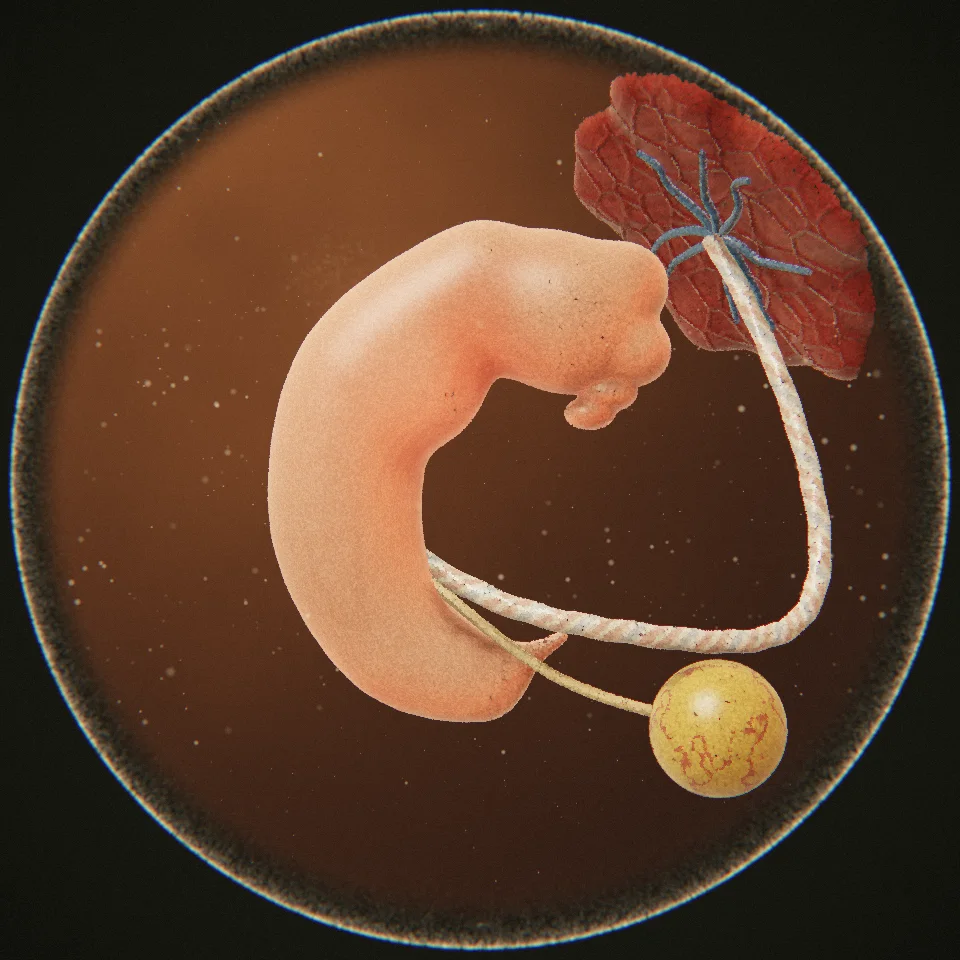
The embryo is about 2 mm long, like a sesame seed1.
The nervous system is developing: the brain and spinal cord are forming rapidly, and the heart starts to beat around this week1,2. This is also when most of the other organs begin to form2.
The face is starting to take shape, with a tiny nose and little eyes, which will stay closed until around week 281.
It already has some of its own blood vessels, and a string of them will make up the umbilical cord. The cord will bring it everything it needs from the placenta, which is forming now. The placenta will give your baby nutrients and oxygen and remove waste products1.
Your body
Many women realise they are pregnant around now. You might notice your period is late, and you may feel a bit under the weather1.
Not everyone has regular cycles, so you may not notice that your period is late. You might also have some light bleeding and think it is your period, when it can be implantation bleeding, which happens when the embryo attaches to the lining of the womb1.
In the first trimester, many women feel extremely tired. Other early signs can include1:
- A metallic taste in your mouth and sore breasts.
- Nausea, which can come at any time of day.
- Mood swings.
- New food likes and dislikes, and a sharper sense of smell.
- Needing to pee more often, and a milky white vaginal discharge.
- Light spotting and cramps a bit like period pains.
- Darker patches on your face, known as chloasma, and thicker, shinier hair.
- Bloating.
Health and tips
The pregnancy test. If you want to take one, now is a good time: tests pick up changes in your urine from week 3 or 41. After IVF, test on the date your clinic gives you3.
Food cravings. Some people get cravings and some do not. They are caused by hormonal changes affecting taste and smell. Try to keep to a balanced diet1. If you have unusual cravings, such as wanting to eat dirt, talk to your midwife or doctor: it may be pica, a condition caused by a lack of iron1.
Your first appointment. Make an appointment with a midwife or doctor. In the UK, the booking appointment usually takes place between weeks 8 and 12, and the first dating scan between weeks 8 and 141. After IVF with a positive test, your clinic will ask you back for a scan at around 7 weeks to check the heartbeat and confirm the pregnancy4.
Vitamins. You are advised to take 400 micrograms of folic acid a day until at least week 12. Between October and early March, the NHS also suggests a daily 10-microgram vitamin D supplement1.
Smoking, alcohol and caffeine. Do your best to stop smoking and drinking alcohol, and go easy on tea, coffee and anything else with caffeine. Your midwife or doctor can help1.
Antenatal classes. Ask your midwife about antenatal classes. They are a chance to meet other people and prepare for parenthood1.
For your partner or supporter
If you are the partner or the person supporting her, it is normal for both of you to have mixed feelings, even if the pregnancy was very much wanted. A first pregnancy changes your life, and change can be frightening5.
A few simple things help5:
- Eating healthily together and, if you smoke, getting help to stop.
- Going to appointments and scans whenever you can, or talking them through afterwards.
- With sex, bearing in mind that her breasts may be very tender in the early weeks. Avoid sex if there is any bleeding or pain.
When to get help
If you have any bleeding, even light, get it checked1. Get urgent help if the bleeding is heavy, if you have severe tummy or shoulder pain, or if you feel dizzy or faint6.
Finding out you are pregnant can be exciting, but it is normal to have worries too. Around 1 in 5 mums feel anxious or stressed during pregnancy. Do not keep it to yourself: talk to your midwife or doctor, and try some relaxing breathing exercises1.
If you already take a prescribed medicine when you find out you are pregnant, tell your doctor or specialist as soon as possible, and do not stop it until you have spoken to them7.
Frequently asked questions
How big is the fetus at week 5 of pregnancy?
According to the NHS, it is about 2 mm.
What does craving dirt during pregnancy mean?
It may be pica, a condition caused by a lack of iron. Talk to your doctor or midwife.
Is it normal to feel worried when you find out you're pregnant?
Yes. Worries are common at the start. If they do not go away, talk to your midwife or doctor.
Sources
- National Health Service (NHS), Regne Unit. 5 weeks pregnant guide. NHS Best Start in Life.
- MSD Manual, versió per al públic. Stages of Development of the Fetus. msdmanuals.com.
- Human Fertilisation and Embryology Authority (HFEA). In vitro fertilisation (IVF). hfea.gov.uk.
- National Health Service (NHS), Regne Unit. IVF. nhs.uk.
- NHS 111 Wales. Dads and partners. 111.wales.nhs.uk.
- National Health Service (NHS), Regne Unit. Vaginal bleeding in pregnancy. nhs.uk.
- National Health Service (NHS), Regne Unit. Mental health in pregnancy. nhs.uk.
- Hospital Clínic de Barcelona. Pregnancy and Childbirth: alarm signs. clinicbarcelona.org.