Everything here is written from scientific sources. If you have any doubts, check the original sources.
Your baby this week
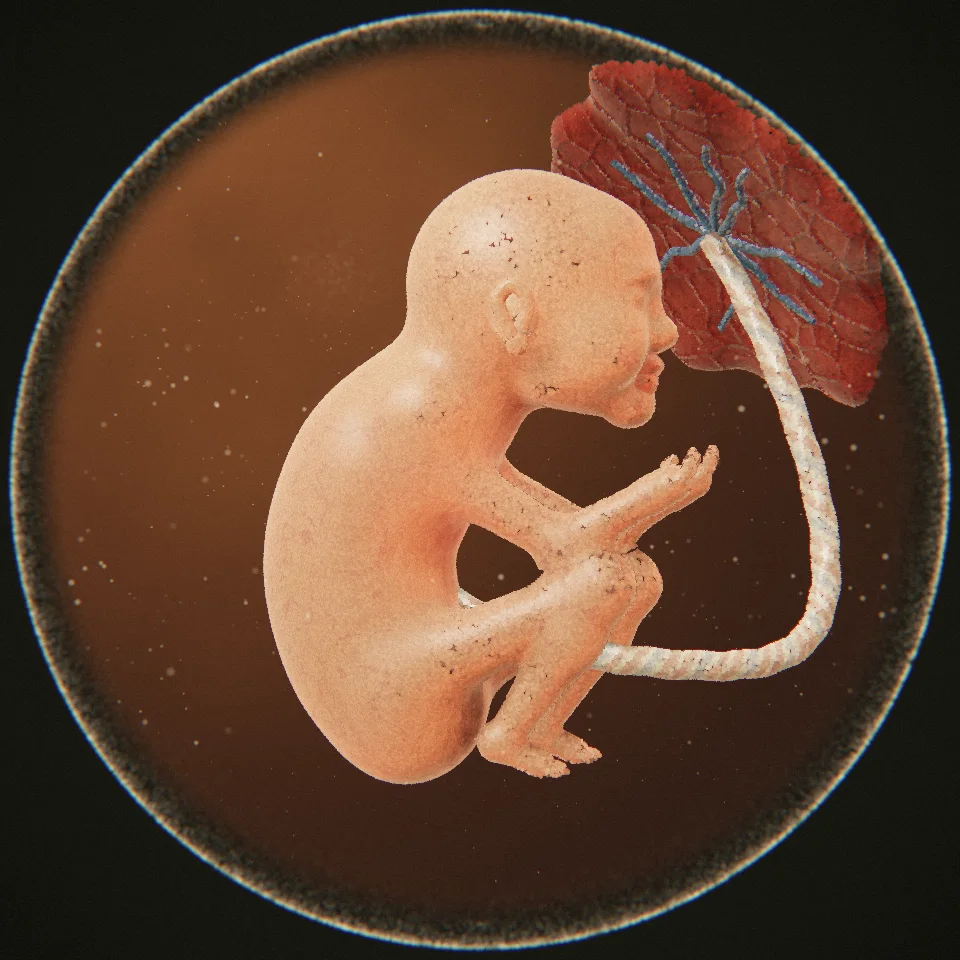
The fetus is about 14.2 cm long from head to bottom, roughly the size of a bell pepper1. The WHO median estimated fetal weight for this week is 222 g2.
This week your baby’s hearing, sense of touch and swallowing and sucking reflexes are developing. They are also wriggling a lot and moving their arms and legs1.
In fact, your baby has been moving for a couple of months, but you may not have noticed. You might start to feel it now, like bubbling or fluttering in your tummy1.
The placenta is fully formed by 18 to 20 weeks3.
Your body
As your bump grows, you might feel a bit clumsier. Your breasts may also have gone up a size, especially if this is your first pregnancy1.
Your blood pressure is probably a little lower than before. Don’t leap up from the sofa, or you may feel dizzy1.
You may notice a dark line running down your tummy, called the linea nigra. It is normal skin pigmentation and nothing to worry about: it usually fades a few months after the birth1.
You may well have more energy now. Even so, some symptoms can carry on, such as1:
- Stretch marks, tiredness and trouble sleeping.
- Swollen, bleeding gums.
- Pain on the sides of your bump as your womb grows.
- Constipation, indigestion and heartburn.
- Leg cramps and dizziness.
- Dark patches on your face (chloasma).
The anatomy scan
The anatomy scan happens at around 18 to 21 weeks in the UK4, and at about 18 to 24 weeks according to ISUOG5. The exact date depends on your hospital.
It looks at your baby in detail to check for anything unusual in their development. It can pick up a range of conditions, but not all of them. It will not hurt you or your baby, though it may feel a little uncomfortable, because the sonographer may need to press on your tummy to get a good view1.
It may be possible to tell the sex, but not everyone wants to know, and not every hospital will tell you. If you don’t want to know, say so before the scan starts1.
We cover it in more detail in the week 20 guide.
Health and tips
Pelvic floor. Gentle exercises can help prevent leaks when you laugh, sneeze or cough. To find the right muscles, imagine you are having a pee and stopping midflow1.
Exercising safely. Exercise is safe in pregnancy. Tell the instructor you are pregnant, drink water, try to keep cool and stop if you feel unwell. Avoid sports with a risk of falling or being hit in the tummy, don’t exercise on an empty stomach, and don’t scuba dive6.
What to eat. There is no need to eat for two: a varied, balanced diet with plenty of fruit and vegetables is enough1. Avoid raw or undercooked meat, liver and liver products, and unpasteurised milk and dairy. Mould-ripened soft cheeses such as brie or camembert are only safe if thoroughly cooked7.
Smoking, alcohol and caffeine. Try to stop smoking and drinking alcohol, and go easy on coffee, tea and other caffeinated drinks. Your midwife or doctor can help1.
For your partner or supporter
If you are her partner or the person supporting her, the anatomy scan is a good appointment to be at, so you can see the baby on the screen. If extra tests are needed afterwards, your support is especially important8.
If she is worried, go with her to the appointment or talk it through when she gets home8.
As for sex, it is normal for desire to change in pregnancy. There is usually no medical reason to avoid it, but don’t have sex if there is any bleeding or pain, and find positions where she is comfortable. If you are not having sex, find other ways to be close, and talk about it8.
When to get help
If you are struggling with day-to-day life, talk to your midwife or doctor: they are there to support you1. Light spotting can happen, but get advice about any bleeding1.
Get urgent medical help if the bleeding is heavy, if you have severe tummy or shoulder pain, or if you feel dizzy or faint9.
If you feel anxious or low, or are worried about your mental health, talk to your midwife or doctor10.
Frequently asked questions
How big is the fetus at week 18 of pregnancy?
According to the NHS, it is about 14.2 cm, head to bottom. The WHO median estimated weight is 222 g.
Does the anatomy scan hurt?
No, though pressure from the probe may be a little uncomfortable.
What is the dark line on my tummy?
It is the linea nigra, a normal change in skin pigmentation. It usually fades a few months after the birth.
Sources
- National Health Service (NHS), Regne Unit. 18 weeks pregnant guide. NHS Best Start in Life.
- World Health Organization (Kiserud T, et al.). The World Health Organization Fetal Growth Charts: A Multinational Longitudinal Study of Ultrasound Biometric Measurements and Estimated Fetal Weight. PLoS Med 2017;14(1):e1002220.
- MSD Manual, versió per al públic. Stages of Development of the Fetus. msdmanuals.com.
- National Health Service (NHS), Regne Unit. 9 weeks pregnant guide. NHS Best Start in Life.
- International Society of Ultrasound in Obstetrics and Gynecology (ISUOG). ISUOG Practice Guidelines (updated): performance of the routine mid-trimester fetal ultrasound scan. Ultrasound Obstet Gynecol 2022;59(6):840-856.
- National Health Service (NHS), Regne Unit. Exercise in pregnancy. nhs.uk.
- National Health Service (NHS), Regne Unit. Foods to avoid in pregnancy. nhs.uk.
- NHS 111 Wales. Dads and partners. 111.wales.nhs.uk.
- National Health Service (NHS), Regne Unit. Vaginal bleeding in pregnancy. nhs.uk.
- National Health Service (NHS), Regne Unit. Mental health in pregnancy. nhs.uk.
- Hospital Clínic de Barcelona. Pregnancy and Childbirth: alarm signs. clinicbarcelona.org.