Everything here is written from scientific sources. If you have any doubts, check the original sources.
Your baby this week
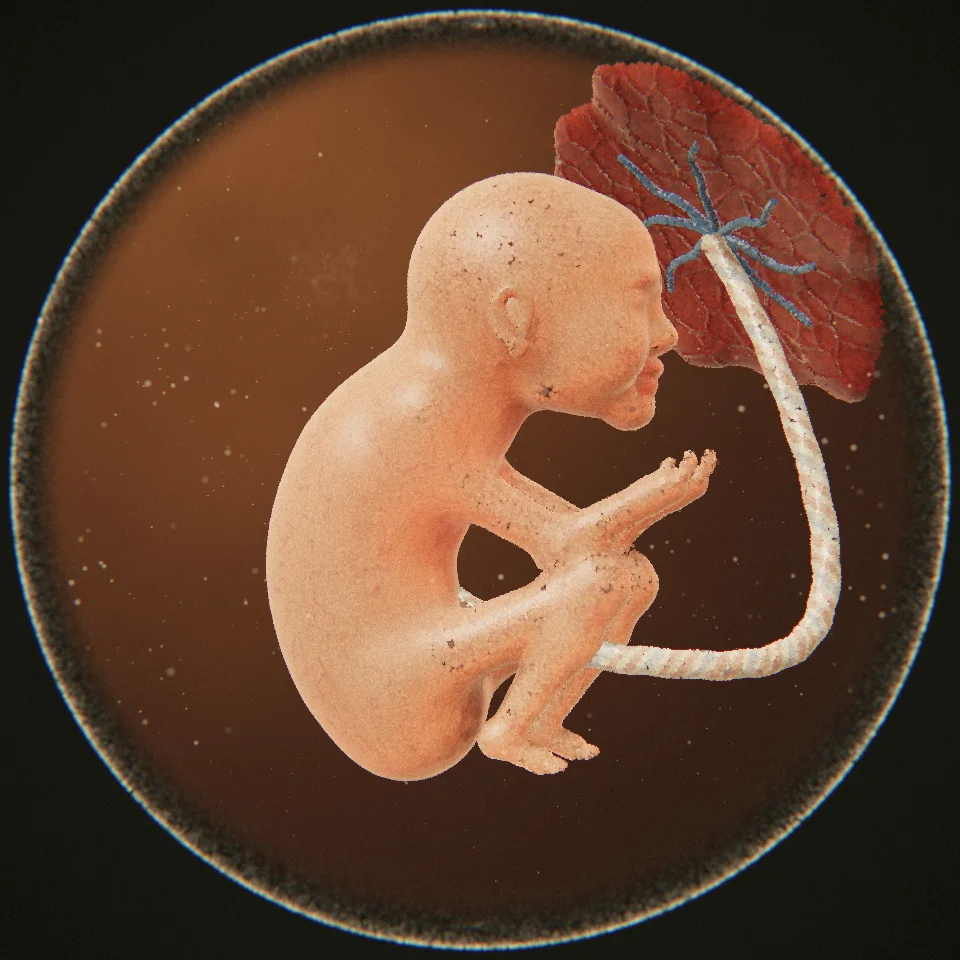
The fetus is about 12 cm long from head to bottom, roughly the size of a pomegranate1. The WHO median estimated fetal weight for this week is 179 g2.
Your baby can already move their eyes, although they stay shut for now. They react to loud noises and open and close their mouth. Their fingernails are starting to grow, and they will have their own unique fingerprints: even identical twins have different ones1.
The placenta is growing too. It is the organ that feeds your baby and removes waste, and by the end of pregnancy it will weigh around 500 g1.
First movements. Many women notice the first movements between weeks 18 and 241. MSD puts this between weeks 16 and 203. You might feel something like bubbling, fluttering or rolling. Your baby may move more after meals, when you listen to loud music, when you rub your tummy and talk to them, or when you are relaxing1.
Your body
Your waist will start to disappear as your womb moves up and out of your pelvis. From now on you will look more obviously pregnant1.
As your bump grows, you may get some aches and pains. Common symptoms at this stage include1:
- Tiredness and trouble sleeping.
- Swollen, bleeding gums and nosebleeds.
- Pain on the sides of your bump as your womb grows (round ligament pain).
- Constipation, indigestion and heartburn.
- Leg cramps, dizziness and swollen hands and feet.
- Dark patches on your face (chloasma) and greasier skin.
Stretch marks. They affect up to 8 in 10 women. Depending on your skin colour, they can be pink, red, purple or brown, and they mostly appear on the tummy and breasts. They are caused by hormones and your skin stretching. After the birth they usually fade to silver and become much less noticeable1.
Your feelings. Around 1 in 5 women feel stressed or anxious during pregnancy, and hormones can make small problems feel overwhelming. If you feel sad or worried, talk to your midwife or doctor1.
Health and tips
Pelvic floor. This is a good time to strengthen your pelvic floor muscles. Gentle exercises can help prevent leaks when you laugh, sneeze or cough. To find the right muscles, imagine you are having a pee and stopping midflow1.
Where to give birth. You can start thinking about it and talk through the local options with your midwife or doctor. It is a big decision, but you can always change your mind1.
Antenatal classes. Ask your midwife about antenatal classes. Even if you already have children, they are worth going to: you meet other people who are expecting1.
Staying active. The recommendation is 150 minutes of moderate activity a week, including two sessions of muscle-strengthening exercise. Walking, swimming and yoga all count. If you are not used to it, start with 10 minutes a day. This is not the time to take up a new vigorous activity such as running4.
Food and vitamins. There is no need to eat for two: a varied, balanced diet with plenty of fruit and vegetables is enough1. In the UK, the NHS advises considering a daily 10 microgram vitamin D supplement between October and early March, when there is not enough sunlight to make it. Ask your midwife whether you need one1.
Smoking, alcohol and caffeine. Try to stop smoking and drinking alcohol, and go easy on coffee, tea and other caffeinated drinks. Your midwife or doctor can help1.
For your partner or supporter
From around week 14, many pregnant women get much of their energy back and may no longer want special treatment5. If you are her partner or the person supporting her, some things still help5:
- Sharing the housework, if you don’t already, and carrying the heavy shopping yourself, as it puts a lot of strain on her back.
- Eating healthily together and knowing which foods to avoid in pregnancy.
- Going to appointments and scans whenever you can. If extra tests are needed, your support is especially important.
It is normal for you to have mixed feelings too, or to worry about money. Talking about it and starting to plan ahead helps5.
When to get help
Talk to your midwife or doctor if your symptoms are getting in the way of everyday life1, or if you are worried about your mental health6. Light spotting can happen, but get advice about any bleeding1.
Get urgent medical help if the bleeding is heavy, if you have severe tummy or shoulder pain, or if you feel dizzy or faint7.
Frequently asked questions
How big is the fetus at week 17 of pregnancy?
According to the NHS, it is about 12 cm, head to bottom. The WHO median estimated weight is 179 g.
When does the fetus move most?
Often after meals, with loud music, when you rub your tummy and talk, or when you are relaxing.
Do stretch marks go away after birth?
They usually fade and become much less noticeable after the birth, although they may stay as faint silvery lines.
Sources
- National Health Service (NHS), Regne Unit. 17 weeks pregnant guide. NHS Best Start in Life.
- World Health Organization (Kiserud T, et al.). The World Health Organization Fetal Growth Charts: A Multinational Longitudinal Study of Ultrasound Biometric Measurements and Estimated Fetal Weight. PLoS Med 2017;14(1):e1002220.
- MSD Manual, versió per al públic. Stages of Development of the Fetus. msdmanuals.com.
- National Health Service (NHS), Regne Unit. Exercise in pregnancy. nhs.uk.
- NHS 111 Wales. Dads and partners. 111.wales.nhs.uk.
- National Health Service (NHS), Regne Unit. Mental health in pregnancy. nhs.uk.
- National Health Service (NHS), Regne Unit. Vaginal bleeding in pregnancy. nhs.uk.
- Hospital Clínic de Barcelona. Pregnancy and Childbirth: alarm signs. clinicbarcelona.org.