Everything here is written from scientific sources. If you have any doubts, check the original sources.
Your baby this week
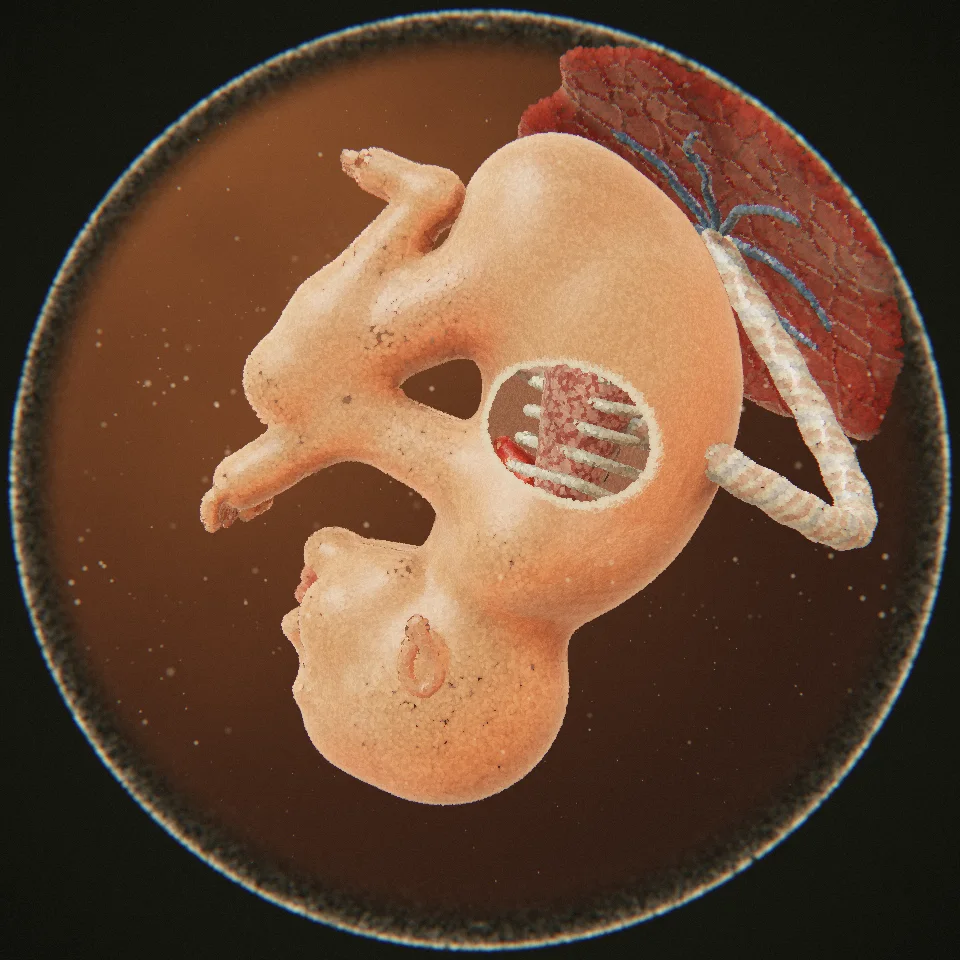
Your baby is about 49.8 cm from head to heel, roughly the length of a stick of rhubarb1. The WHO median estimated fetal weight for this week is 3,186 g2.
The circulatory and musculoskeletal systems have finished developing3.
In the second trimester, your baby was covered in fine, soft hair called lanugo. Most of it has gone now, although some babies are born with patches here and there1.
Your baby is storing a sticky green substance in their bowels, called meconium. It is made up of everything they swallow in the womb, including bits of amniotic fluid and hair. It normally comes out after the birth as their first poo1.
If your baby does a poo during labour, it can be a sign of distress, and they will need close monitoring1.
Your body
An antenatal appointment is usually due around now. Your midwife or doctor will measure your bump with a tape measure and check your blood pressure. They will also test your urine for protein, which could be a sign of pre-eclampsia, a serious condition that can happen in the second half of pregnancy or after the birth1.
One new symptom this week could be frustration, or even boredom. It really will not be long now1.
Third-trimester symptoms carry on, such as painless Braxton Hicks contractions, backache, poor sleep, feeling hot, and swollen hands and feet1.
Health and tips
If your pregnancy goes on. At your appointment you will talk about what might happen if you go beyond 41 weeks. There could be risks for you or your baby, so you may be offered an induction, where labour is started by putting a tablet or gel in your vagina. Around 1 in 5 labours start this way1.
A planned caesarean. If you are having one, it will usually be booked for at least 39 weeks, to give your baby’s lungs the best chance of being fully developed1.
Home birth. In England, around 1 in 50 women give birth at home with a midwife. If that is your plan, the NHS suggests1:
- Having everything ready: something to wear in labour, a nursing bra, breast pads, maternity pads and new-baby essentials.
- Planning your pain relief with your midwife in advance.
- Putting aside towels and waterproof sheets.
- Packing a bag in case there are complications and you need to get to hospital quickly.
Whatever type of birth you choose, flexibility is key1.
Slings and carriers. If you are thinking of buying one, make sure you know how to use it safely1.
Getting out. If you feel cooped up, it is fine to go for a walk, but take your notes with you just in case1.
The RSV vaccine. If you did not have it at around week 28, it can still be given right up until labour starts. It lowers your baby’s risk of severe bronchiolitis1.
For your partner or supporter
In the last few weeks, if you are the partner or the person supporting her, there are some practical things you can get ready4:
- Make sure you can be contacted at all times.
- Decide together how you will get to the hospital, if the birth is planned there.
- If you are driving, check the car works and has fuel, and do a trial run to see how long the journey takes.
- Pack a bag for yourself too, with snacks and your phone.
Talk about the birth plan and fill it in together, so you know what she wants and how you can help. During labour, support her if she changes her mind: her health and the baby’s come first, and birth plans sometimes have to change4.
When to get help
Get urgent help if you have a severe headache that does not go away with simple painkillers, vision problems, pain below the ribs, sudden swelling of the face, hands or feet, or you feel very unwell. These can be signs of pre-eclampsia5.
Get medical advice for any bleeding1. Your baby’s movements should not slow down or stop: if you notice any change, call your midwife or maternity unit straight away6.
Call your hospital or midwife when your contractions last at least 60 seconds and come every 5 minutes, or if you think your waters have broken, even if it is only a trickle7.
If you feel anxious or low, talk to your midwife or doctor. Do not keep it to yourself1.
Frequently asked questions
How big is the fetus at week 38 of pregnancy?
According to the NHS, it is about 49.8 cm, head to heel. The WHO median estimated weight is 3,186 g.
How many women give birth at home in England?
Around 1 in 50, according to the NHS.
What is meconium?
Your baby's first poo. It is a sticky green substance that builds up in the bowels before birth and normally comes out after the baby is born.
Sources
- National Health Service (NHS), Regne Unit. 38 weeks pregnant guide. NHS Best Start in Life.
- World Health Organization (Kiserud T, et al.). The World Health Organization Fetal Growth Charts: A Multinational Longitudinal Study of Ultrasound Biometric Measurements and Estimated Fetal Weight. PLoS Med 2017;14(1):e1002220.
- American College of Obstetricians and Gynecologists (ACOG). How Your Fetus Grows During Pregnancy (FAQ156). Darrera revisió: març de 2026.
- NHS 111 Wales. Dads and partners. 111.wales.nhs.uk.
- National Health Service (NHS), Regne Unit. Pre-eclampsia. nhs.uk.
- National Health Service (NHS), Regne Unit. 40 weeks pregnant guide. NHS Best Start in Life.
- National Health Service (NHS), Regne Unit. 39 weeks pregnant guide. NHS Best Start in Life.
- Hospital Clínic de Barcelona. Pregnancy and Childbirth: alarm signs. clinicbarcelona.org.