Everything here is written from scientific sources. If you have any doubts, check the original sources.
Your baby this week
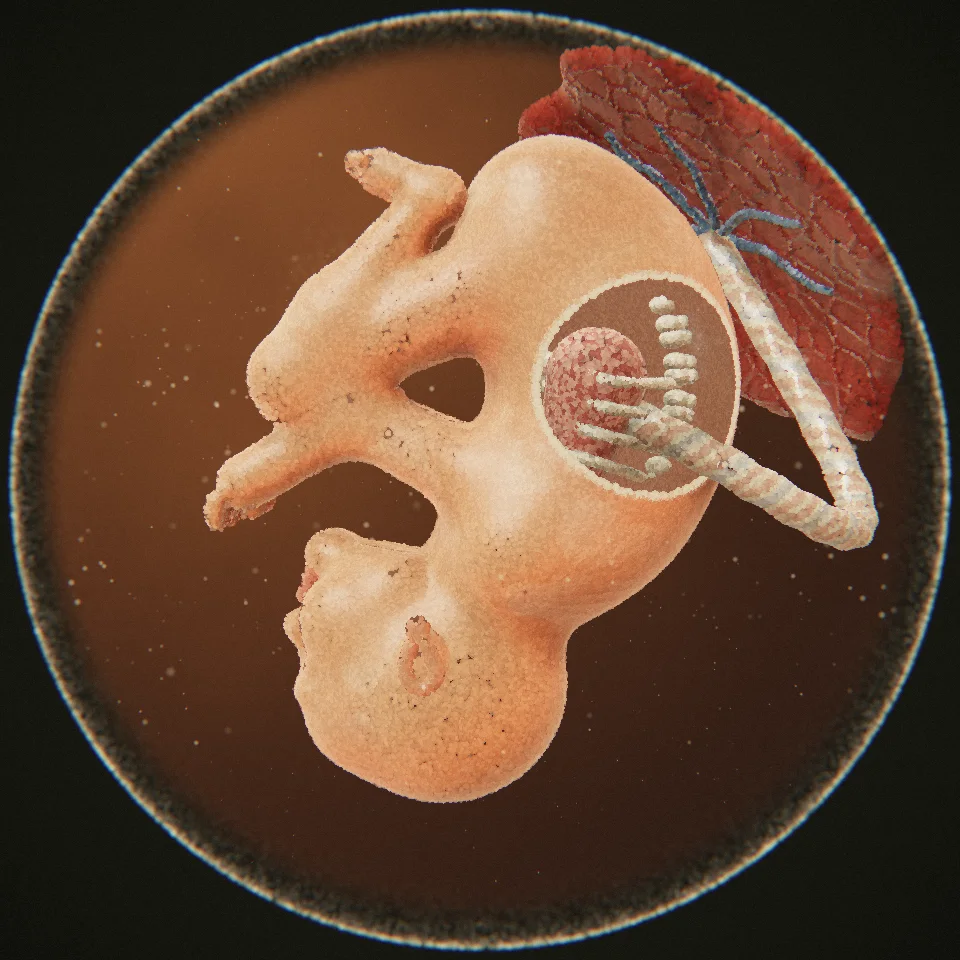
Your baby is about 47.4 cm from head to heel, roughly the size of a romaine lettuce1. They may turn head-down for birth2. The WHO median estimated fetal weight for this week is 2,745 g3.
By now their lungs are probably mature enough to breathe outside the womb without help. They can also suck and digest breast milk1.
Your body
Your baby may already be engaged, meaning they’ve moved head down into your pelvis. That doesn’t mean labour is on the way: it could still be weeks off1.
If your baby isn’t head down, you may be offered external cephalic version. Your doctor or midwife gently presses on your bump to encourage the baby to turn, and it works around half the time1.
You may leak a little pee when you laugh or cough: your pelvic floor is relaxing as your body prepares for birth. Maternity pads, which you’ll also need after the birth, and pelvic floor exercises can help1.
How babies are born
In England, around 6 in 10 births are vaginal, the most common way babies are born. Sometimes labour needs to be induced, by breaking your waters, with medicine or both. A vaginal birth has three stages1:
- First stage: contractions open your cervix to around 10 cm. This usually lasts 6 to 12 hours.
- Second stage: your baby moves down the birth canal, you feel the urge to push and your baby is born. This can last up to 3 hours with a first baby, or 2 hours if you’ve given birth before.
- Third stage: your womb contracts and the placenta comes out, naturally or with an injection of oxytocin to speed it up. It’s usually over within 30 minutes.
Nearly 3 in 10 babies are born by caesarean. Ideally it’s planned, but it can also be done as an emergency. A 10 to 20 cm cut is made, the operation takes 40 to 50 minutes, and you’ll need a few days to recover in hospital1.
Just over 1 in 10 births are assisted, with a ventouse or forceps, and sometimes an episiotomy is needed1.
A vaginal birth after a caesarean is possible if there’s no medical reason against it, and it depends on why you needed the first one. If all is well, your chances are very good. Talk to your team1.
Health and tips
This week’s appointment. Around now you’ll have an antenatal appointment to check your blood pressure, urine and the size of your bump. Make it a priority: it can pick up changes you might not notice, such as very high blood pressure1.
Group B strep. ACOG recommends universal group B strep screening between 36+0 and 37+6 weeks4. Schedules vary by country, so ask what your unit does.
All set. Have your bag packed, important phone numbers written down and your notes within easy reach1.
For your partner or supporter
If you’re the partner or the person supporting her, you can start thinking about the first days at home. If nobody else can help, try to take a week or so off work if you can. Some ideas5:
- Keep visitors to a minimum, as they can wear her out.
- Look after the baby so she can rest every day.
- Take over the housework, without worrying about keeping the place spotless.
- If she’s breastfeeding, bring her a snack and a drink; if your baby is bottle-fed, make up the bottles and share the feeds.
You may have low moments too. Looking after yourself and talking to your partner, friends or GP is part of getting ready5.
If you’re expecting twins
If your twins are identical and share a placenta, the NHS offers a planned birth at 36 weeks; if each has their own placenta, at 37 weeks6. Continuing beyond these dates can be dangerous, and the plan will be discussed with you6. Twins who share a placenta usually have more scans and monitoring because they have a higher risk of twin-to-twin transfusion syndrome, a problem with the placenta6.
When to get help
If your baby’s movements change or stop, contact your midwife or hospital without delay7.
Get help straight away if you have a severe headache that doesn’t go away with painkillers, blurred vision or flashing lights, pain below your ribs, or sudden swelling of your face, hands or feet. These can be signs of pre-eclampsia8.
Very itchy palms or soles also need urgent attention9, as does heavy bleeding or bleeding with severe pain10.
If you’re feeling anxious or low, talk to your midwife or doctor1.
Frequently asked questions
How big is the fetus at week 36 of pregnancy?
According to the NHS, it is about 47.4 cm, head to heel. The WHO median estimated weight is 2,745 g.
Can I have a vaginal birth after a caesarean?
Yes, if there is no medical reason against it. Talk to your team.
How long does the first stage of labour last?
According to the NHS, the cervix opens to around 10 cm and this stage usually lasts 6 to 12 hours.
Sources
- National Health Service (NHS), Regne Unit. 36 weeks pregnant guide. NHS Best Start in Life.
- American College of Obstetricians and Gynecologists (ACOG). How Your Fetus Grows During Pregnancy (FAQ156). Darrera revisió: març de 2026.
- World Health Organization (Kiserud T, et al.). The World Health Organization Fetal Growth Charts: A Multinational Longitudinal Study of Ultrasound Biometric Measurements and Estimated Fetal Weight. PLoS Med 2017;14(1):e1002220.
- American College of Obstetricians and Gynecologists (ACOG). Prevention of Group B Streptococcal Early-Onset Disease in Newborns: Committee Opinion 797. Obstet Gynecol 2020;135(2):e51-e72.
- NHS 111 Wales. Dads and partners. 111.wales.nhs.uk.
- National Health Service (NHS), Regne Unit. Antenatal care with twins. nhs.uk.
- National Health Service (NHS), Regne Unit. 35 weeks pregnant guide. NHS Best Start in Life.
- National Health Service (NHS), Regne Unit. Pre-eclampsia. nhs.uk.
- National Health Service (NHS), Regne Unit. Itching and intrahepatic cholestasis of pregnancy. nhs.uk.
- National Health Service (NHS), Regne Unit. Vaginal bleeding in pregnancy. nhs.uk.
- Hospital Clínic de Barcelona. Pregnancy and Childbirth: alarm signs. clinicbarcelona.org.