Everything here is written from scientific sources. If you have any doubts, check the original sources.
Your baby this week
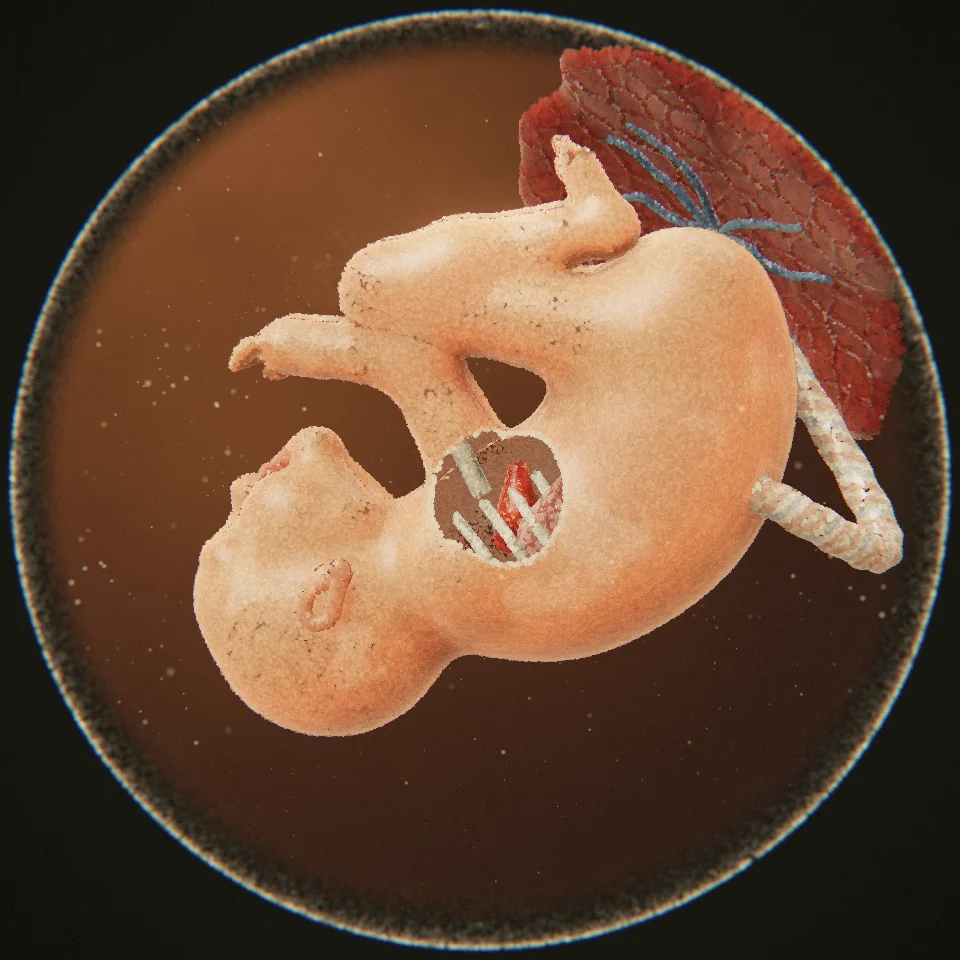
Your baby is about 46.2 cm from head to heel, like a honeydew melon. They’re getting chubbier, which will help them stay at the right temperature after birth1. The WHO median estimated fetal weight for this week is 2,527 g2.
It’s getting cramped in there, but your baby should keep moving. You should feel movements as strongly and regularly as in previous weeks1.
Your body
If you’ve noticed yellow stains in your bra, that’s probably colostrum, an early milk rich in antibodies. If you breastfeed, it helps protect your baby from infections. Around 3 to 5 days after the birth your milk will come in, and your breasts will get even bigger. A nursing bra with room to grow and some breast pads can help1.
Your ribs may be sore too. That’s often because your baby is head down and kicking away1.
Pain relief options for labour
There are lots of effective ways to manage pain in labour, and you don’t need to pick just one: you can start with one and move on to another1.
- Self-help. Relaxation, moving around and knowing what to expect. No side effects, but they don’t work for everyone.
- Gas and air. A mixture of oxygen and nitrous oxide that you breathe in. It works quickly, but can make you feel sick and may not take the pain away completely.
- Pethidine. An injection that can help you relax for 2 to 4 hours and takes about 20 minutes to work. It isn’t suitable late in labour, as it can affect your baby’s breathing and feeding.
- Epidural. A local anaesthetic in your back that blocks pain. It can work well in a difficult labour, but needs an anaesthetist and isn’t available everywhere. It can slow labour down and make an intervention, such as forceps, more likely. Around 1 in 8 women also need other pain relief.
- Water birth. Warm water is soothing and makes it easier to move. Getting in too early can slow labour, and you’ll need to get out if there are complications.
- TENS. Small electrical currents delivered through pads on your back. It may help in early labour, but not later on.
- Alternative methods. Acupuncture, aromatherapy or homeopathy. Most have no side effects, but there’s no strong evidence that they work.
Talk through your preferences with your midwife, doctor and partner, and write them in your birth plan. You can change your mind on the day1.
Health and tips
Whooping cough vaccine. In the UK it’s usually offered between weeks 16 and 32, but it’s not too late to have it now. It protects your baby for their first few weeks of life1.
Group B strep. Up to 2 in 5 people carry this bacteria. In pregnancy it poses a small risk to your baby, and most infections in newborns can be prevented. Ask your midwife1.
Newborn screening. Soon after the birth you’ll be offered screening tests for your baby, so they can be treated in time if needed. Your decision will be respected1.
For your partner or supporter
If you’re the partner or the person supporting her, now is a good time to talk about what you both expect from labour and fill in the birth plan together. That way you’ll know what she wants and how you can help. If she changes her mind during labour, support her. Plans sometimes have to change: what matters is the health of mother and baby3.
Most partners stay during labour, but it’s important that you’re both happy with that. If you’d rather not be there, talk about it. A friend or relative might be able to go with her instead3.
If you’re expecting twins
Around 6 in 10 twins are born before 37 weeks. For triplets, almost 8 in 10 are born before 35 weeks, which is when the NHS offers a planned birth for an uncomplicated triplet pregnancy4. If you decide not to have a planned birth, you’ll be offered weekly appointments with an obstetrician, a scan every week and a growth scan every two weeks4.
When to get help
If your baby’s movements change or stop, talk to your midwife or doctor without delay1.
If your rib pain is really bad or under your ribs, get it checked in case it’s pre-eclampsia, although it’s more likely your baby is just very active1. A severe headache, vision problems or sudden swelling also need checking straight away5.
Get any bleeding checked1. If you’re feeling anxious or low, don’t keep it to yourself and ask for help1.
Frequently asked questions
How big is the fetus at week 35 of pregnancy?
According to the NHS, it is about 46.2 cm, head to heel. The WHO median estimated weight is 2,527 g.
Can I combine pain relief methods in labour?
Yes. You can start with one and move on to another.
When does breast milk come in after the birth?
According to the NHS, it usually comes in around 3 to 5 days after the birth.
Sources
- National Health Service (NHS), Regne Unit. 35 weeks pregnant guide. NHS Best Start in Life.
- World Health Organization (Kiserud T, et al.). The World Health Organization Fetal Growth Charts: A Multinational Longitudinal Study of Ultrasound Biometric Measurements and Estimated Fetal Weight. PLoS Med 2017;14(1):e1002220.
- NHS 111 Wales. Dads and partners. 111.wales.nhs.uk.
- National Health Service (NHS), Regne Unit. Antenatal care with twins. nhs.uk.
- National Health Service (NHS), Regne Unit. Pre-eclampsia. nhs.uk.
- Hospital Clínic de Barcelona. Pregnancy and Childbirth: alarm signs. clinicbarcelona.org.