Everything here is written from scientific sources. If you have any doubts, check the original sources.
Your baby this week
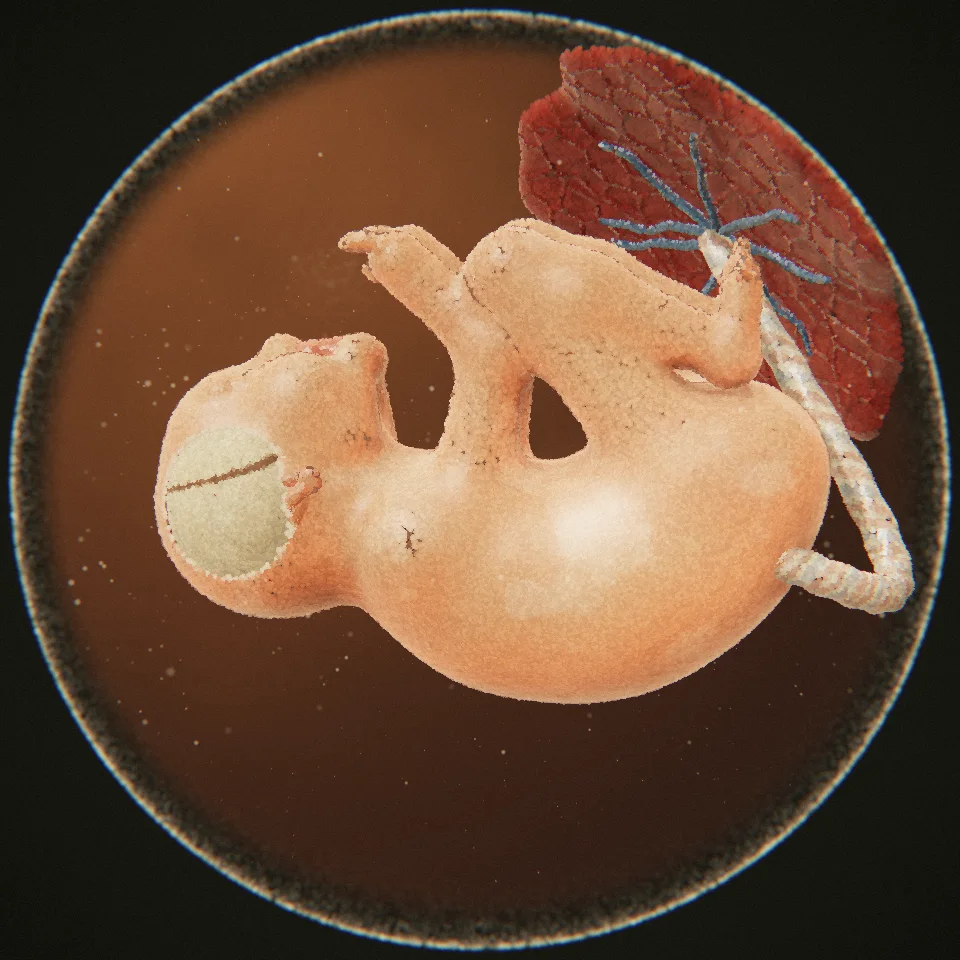
Your baby is about 45 cm from head to heel, roughly the size of a cantaloupe melon1. The WHO median estimated fetal weight for this week is 2,312 g2.
They’re curled up inside your womb, with their legs bent up towards their chest. There isn’t much room, but you should still feel them shifting around and see your bump change shape1.
Fingernails reach the fingertips and limbs look chubbier3.
If you’re having a boy, his testicles are moving down from his abdomen into his scrotum. When he’s born, his genitals may look quite large. This is swelling from extra fluid or a late rush of hormones, and it goes down after a few days1.
Your body
You may feel as though some symptoms have vanished. This can happen when your baby moves head down into your pelvis, a gradual process called engagement. The drop frees up space in your abdomen: if you’ve been breathless, that should ease, and with less pressure on your stomach, heartburn may improve too1.
It’s a relief, but it doesn’t mean labour is about to start: you’ll probably wait several more weeks. On the other hand, you may need to pee more often and walking may be harder1.
Your breasts may feel huge and leak small amounts of colostrum, a yellowish fluid. It’s early milk, rich in antibodies, and helps protect your baby from illness if you breastfeed. If your breasts are sore, a light bra at night and a more supportive one during the day may help1.
Painless Braxton Hicks contractions, backache, cramps, sleeping problems and swollen hands and feet may also carry on1.
Health and tips
Sleep on your side. It’s now important to sleep on your side. Evidence shows it’s best for your baby, because it helps blood flow to the placenta. You’re also less likely to get backache1.
This week’s appointment. In the UK there’s an antenatal appointment around week 34. Keep eating healthily, taking gentle exercise and resting often1.
Keeping active. The recommendation is 150 minutes of exercise a week during pregnancy. You could start with 10 minutes a day, such as a brisk walk. Listen to your body and do what feels right1.
Work. It’s normal to find work hard now, especially if you travel on public transport or stand up a lot. Some people prefer to keep working until the birth, and if that suits you, that’s fine. If you’d like advice on when to stop, talk to your midwife or doctor1.
Speak up. If you’re unhappy with any aspect of your care, tell your midwife or doctor1.
Contraception. It’s probably the last thing on your mind, but now is a good time to think about which method you’ll use after the birth. You could get pregnant again sooner than you think, and too short a gap between pregnancies can cause problems. Your doctor or midwife can help you decide1.
For your partner or supporter
At the end of pregnancy the extra weight is hard to ignore, and tiredness and irritability can return. If she’s already on maternity leave, she may also feel lonely without her colleagues. If you’re the partner or the person supporting her, now is the time to share the housework, if you don’t already, and to carry the heavy shopping yourself4.
Money may be a worry too: less income for a while and more expenses. Looking at what support you’re entitled to and planning ahead can help4.
As for sex, there’s usually no medical reason to avoid it, but don’t have sex if there’s any bleeding or pain, and find positions where she’s comfortable. If you’re not having sex, find other ways of being close, and talk about it4.
When to get help
If your baby’s movements change or they stop moving, contact your midwife or hospital as soon as possible5.
Contact your maternity unit straight away if you have a severe headache that doesn’t go away with painkillers, vision problems, pain below your ribs, sudden swelling of your face, hands or feet, or heartburn that doesn’t go away with medicine, as these can be signs of pre-eclampsia6.
Very itchy skin, especially on your palms or the soles of your feet, or itching that’s worse at night, also needs urgent attention7. Get any bleeding checked1.
If you’re feeling anxious or low, talk to your midwife or doctor, as well as your partner, friends or family1.
Frequently asked questions
How big is the fetus at week 34 of pregnancy?
According to the NHS, it is about 45 cm, head to heel. The WHO median estimated weight is 2,312 g.
How much exercise can I do late in pregnancy?
The NHS suggests starting with 10 minutes a day, such as a brisk walk.
Why is it recommended to sleep on your side late in pregnancy?
According to the NHS, it's best for the baby because it helps blood flow to the placenta, and you're also less likely to get backache.
Sources
- National Health Service (NHS), Regne Unit. 34 weeks pregnant guide. NHS Best Start in Life.
- World Health Organization (Kiserud T, et al.). The World Health Organization Fetal Growth Charts: A Multinational Longitudinal Study of Ultrasound Biometric Measurements and Estimated Fetal Weight. PLoS Med 2017;14(1):e1002220.
- American College of Obstetricians and Gynecologists (ACOG). How Your Fetus Grows During Pregnancy (FAQ156). Darrera revisió: març de 2026.
- NHS 111 Wales. Dads and partners. 111.wales.nhs.uk.
- National Health Service (NHS), Regne Unit. 32 weeks pregnant guide. NHS Best Start in Life.
- National Health Service (NHS), Regne Unit. Pre-eclampsia. nhs.uk.
- National Health Service (NHS), Regne Unit. Itching and intrahepatic cholestasis of pregnancy. nhs.uk.
- Hospital Clínic de Barcelona. Pregnancy and Childbirth: alarm signs. clinicbarcelona.org.