Everything here is written from scientific sources. If you have any doubts, check the original sources.
Your baby this week
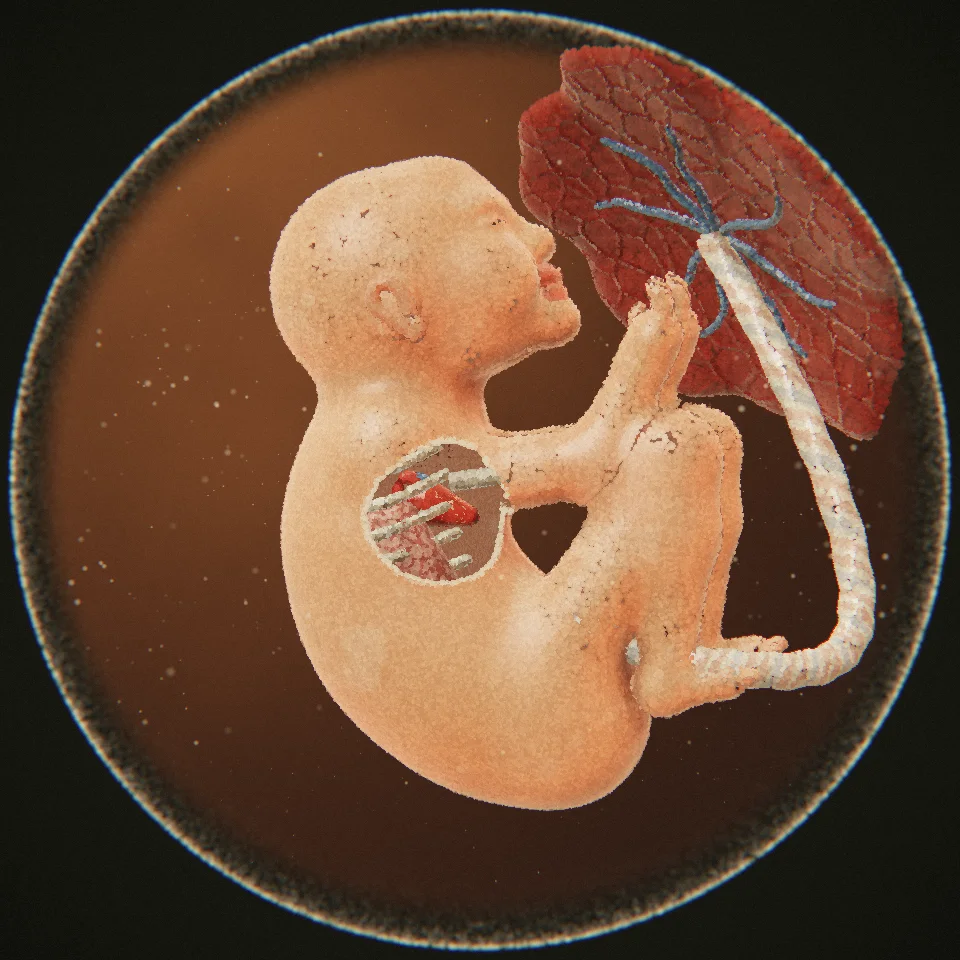
Your baby is about 42.4 cm from head to heel, like a bunch of celery. They’re fully formed and now need to put on weight1. The WHO median estimated fetal weight for this week is 1,901 g2.
Over the next four weeks they’ll gain around 1 kg of fat, which will help them stay at the right temperature after birth1.
Your baby is probably head down by now. If not, there’s still time. If they still haven’t turned by around week 36, your midwife or doctor may suggest ways to help them1.
There’s less room in your womb, but you should keep feeling movements at the same rate until you give birth1.
Your body
Over the next four weeks you may gain around 450 g a week1. With all that weight up front, walking can get harder and you may find yourself waddling a little. That’s your body’s way of compensating1.
It’s also normal to feel more tired than usual. Try to rest several times a day1. Other common symptoms include1:
- Sleeping problems, backache and headaches.
- Pain on the sides of your bump as your womb stretches.
- Heartburn, bloating and constipation.
- Leg cramps and dizziness.
- Swollen hands and feet.
- Piles and bleeding gums.
Health and tips
Vaccines. The NHS recommends having the whooping cough vaccine before week 33. You can have it later, but your baby is less likely to get the protection. If you haven’t had it, talk to your midwife or doctor this week1. The RSV vaccine lowers your baby’s risk of severe bronchiolitis, a lung infection that can make it hard for them to breathe and feed1. The CDC recommends it between weeks 32 and 36, from September to January3; the UK offers it around week 284, but it can also be given later, right up until labour1.
Vitamin K. Within 24 hours of birth you’ll be offered vitamin K for your baby. It helps blood to clot and can prevent a very rare but serious bleed. It’s usually given as an injection in the thigh and is very safe. You can say no, or ask for it to be given by mouth instead1.
Where you’ll give birth. Ask as many questions as you need and remember you can change your mind. If you’re having a planned caesarean, find out how long you’ll be in hospital so you can make arrangements, for example for your other children. In the UK, the average stay is 3 or 4 days1.
Your pelvic floor. Gentle exercises help prevent leaks when you laugh, sneeze or cough. To find the right muscles, imagine stopping your flow of pee midway1.
Work. You shouldn’t be lifting heavy things, and you may need extra breaks and somewhere to sit1.
For your partner or supporter
Towards the end of pregnancy, the tiredness and irritability of the early months often come back, and fear about the birth can set in. If you’re the partner or the person supporting her, these things help5:
- Encourage her to talk about what’s worrying her. It may take a while for her to open up, so be patient.
- Share the housework and carry the heavy shopping yourself.
- Go to antenatal classes for couples. The more you know about labour, the more you’ll be able to help.
If you’re expecting twins
Around 6 in 10 twins are born before 37 weeks6. That’s why a planned birth is offered: the NHS offers it at 37 weeks if each twin has their own placenta, at 36 weeks for identical twins sharing a placenta, and at 32 to 33 weeks for twins who share both a placenta and a sac, which is very rare6. Continuing beyond these dates can be dangerous, and the plan is agreed with you6. A twin pregnancy also carries a higher risk of iron deficiency anaemia and pre-eclampsia, so it’s important not to miss any appointments6.
When to get help
If your baby’s pattern of movements changes or they stop moving, contact your midwife or hospital as soon as possible1.
Get any bleeding checked1. Get urgent help if it’s heavy, if you have severe tummy pain, or if you feel faint7.
Contact your maternity unit straight away if you have a severe headache that doesn’t go away with painkillers, blurred vision, pain below your ribs, or sudden swelling of your face, hands or feet. These can be signs of pre-eclampsia8.
If you’re feeling anxious or low, talk to your midwife or doctor. Don’t keep it to yourself1.
Frequently asked questions
How big is the fetus at week 32 of pregnancy?
According to the NHS, it is about 42.4 cm, head to heel. The WHO median estimated weight is 1,901 g.
Why are babies given vitamin K?
It helps blood to clot and can prevent a very rare but serious bleed.
Can I still have the whooping cough vaccine at week 32?
Yes. The NHS recommends having it before week 33. You can have it later, but your baby is less likely to get the protection.
Sources
- National Health Service (NHS), Regne Unit. 32 weeks pregnant guide. NHS Best Start in Life.
- World Health Organization (Kiserud T, et al.). The World Health Organization Fetal Growth Charts: A Multinational Longitudinal Study of Ultrasound Biometric Measurements and Estimated Fetal Weight. PLoS Med 2017;14(1):e1002220.
- Centers for Disease Control and Prevention (CDC). RSV vaccine guidance for pregnant people. cdc.gov.
- National Health Service (NHS), Regne Unit. Week-by-week guide to pregnancy. nhs.uk.
- NHS 111 Wales. Dads and partners. 111.wales.nhs.uk.
- National Health Service (NHS), Regne Unit. Antenatal care with twins. nhs.uk.
- National Health Service (NHS), Regne Unit. Vaginal bleeding in pregnancy. nhs.uk.
- National Health Service (NHS), Regne Unit. Pre-eclampsia. nhs.uk.
- Hospital Clínic de Barcelona. Pregnancy and Childbirth: alarm signs. clinicbarcelona.org.