Everything here is written from scientific sources. If you have any doubts, check the original sources.
Your baby this week
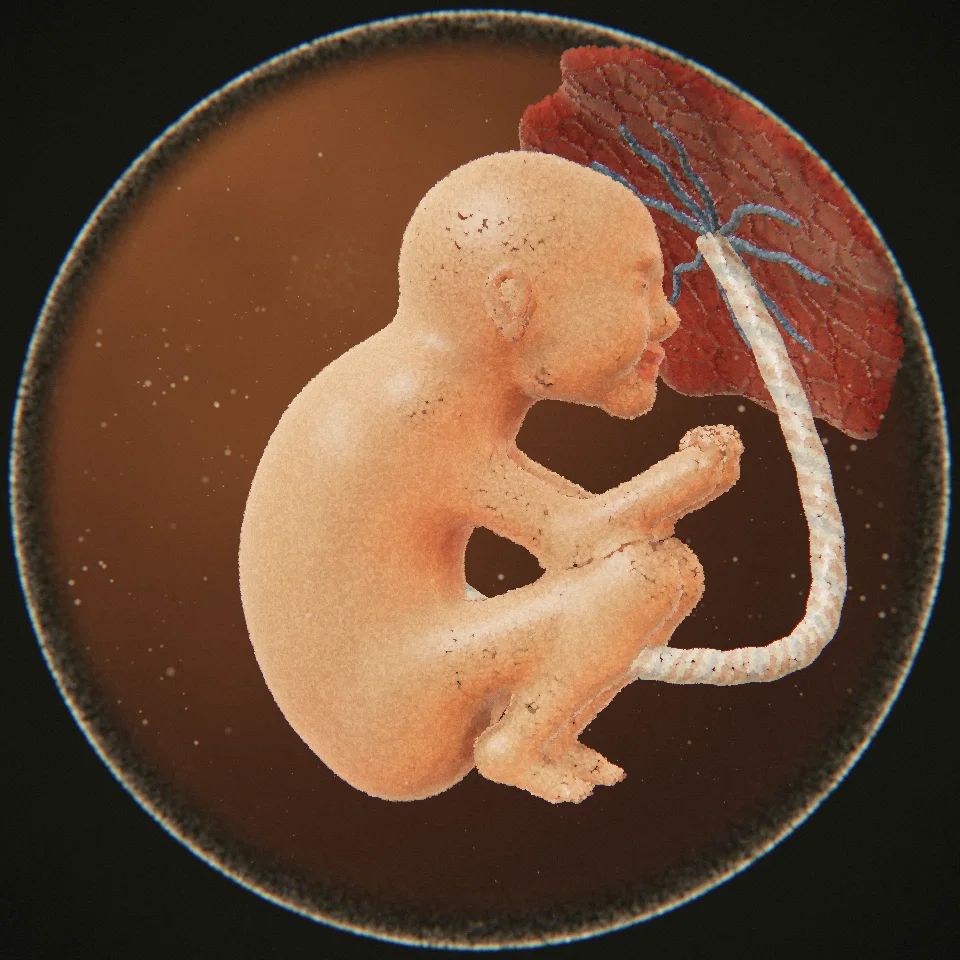
Your baby is about 38.6 cm from head to heel, roughly the size of a butternut squash1. The WHO median estimated fetal weight for this week is 1,350 g2.
Your baby is now fully formed. Over the next few weeks there’s lots to do: maturing their organs and putting on fat. For a while they’ve been covered in a greasy white coating called vernix, which protects the skin, and in soft, downy hair for warmth. Both now start to disappear1.
They can now stretch, kick and grasp3. They have their own sleeping and waking patterns, and they’re often most active just when you want to sleep1.
Your body
You might feel a bit breathless, as your baby pushes against your lungs. Carrying the extra weight also takes its toll1.
Sleep isn’t easy. It’s understandable to feel irritated when people tell you to enjoy your sleep while you can. You may get leg cramps and, if the baby is pressing on your bladder, need to pee more often at night1.
You may also feel clumsy. Your centre of gravity is changing, which throws off your balance, and it takes time to get used to having a bump1.
Backache, heartburn, bloating, constipation, piles, swollen hands and feet, dizziness and feeling hot are all common1.
Health and tips
Your feelings. You may be excited, nervous or both. Pregnancy stirs up all kinds of emotions, and the most important thing is to talk about whatever is worrying you with the people close to you, your midwife or your doctor1.
Rest. Rest during the day when you can. Sleep on your side, with a pillow under your bump and another between your legs. If you’re so tired you feel you can’t cope, talk to your midwife or doctor1.
Get to know their movements. Learn your baby’s patterns of activity and sleep. If they change or stop, contact your midwife or hospital1.
Your birth plan. If you’d like one, you can start writing it now. Think about what pain relief you want, if any, who you’d like as your birth partner and what role you’d like them to play1.
Vaccines. The NHS advises having the whooping cough vaccine before week 33. You can have it later, but your baby is less likely to get protection from you. The RSV vaccine is usually offered around week 28, but can be given right up until labour1.
Myths about your baby’s sex. You may have been told the sex at your anomaly scan, but sometimes it’s hard to see, and some hospitals don’t reveal it before the birth. None of these will tell you1:
- The shape of your bump. It depends on your height, muscles, how many babies you’ve had and how much you eat.
- The heart rate. Some say over 140 beats means a girl, but there’s no science to back this up.
- Spinning a ring over your bump. There’s no scientific basis for it.
- Kits sold online. They’re expensive and depend on a usable sample. Some doctors think they’re no better than tossing a coin.
Contraception. It’s probably the last thing on your mind, but now is a good time to plan what contraception you’ll use after the birth. You could get pregnant again sooner than you think, and too short a gap between babies can cause problems1.
For your partner or supporter
If you’re her partner or the person supporting her, talk about what you both expect from labour and fill in the birth plan together. That way you’ll know what she wants and how to help her get it4.
Most partners stay for the birth, but it’s important that you’re both happy with that. If you’d rather not be there, talk it through and listen to how she feels. A friend or relative might be able to go with her instead4.
Be flexible. If she changes her mind during labour, back her up. Her health and the baby’s come first, and birth plans sometimes have to change4.
When to get help
If you notice your baby’s movements change or stop, contact your midwife or hospital straight away1. If you fall, don’t panic, as your baby is well cushioned, but let your midwife or doctor know1.
Get medical advice about any vaginal bleeding1. Get urgent help if you have a severe headache that doesn’t go away with painkillers, vision problems, pain below your ribs, or sudden swelling of your face, hands or feet5.
If you’re feeling anxious or low, talk to your midwife or doctor. Don’t keep it to yourself1.
Frequently asked questions
How big is the fetus at week 29 of pregnancy?
According to the NHS, it is about 38.6 cm, head to heel. The WHO median estimated weight is 1,350 g.
Does bump shape show the baby's sex?
No. It depends on your height, muscles, previous pregnancies and how much you eat.
What should I do if I fall during pregnancy?
Don't panic, your baby is well cushioned, but let your midwife or doctor know.
Sources
- National Health Service (NHS), Regne Unit. 29 weeks pregnant guide. NHS Best Start in Life.
- World Health Organization (Kiserud T, et al.). The World Health Organization Fetal Growth Charts: A Multinational Longitudinal Study of Ultrasound Biometric Measurements and Estimated Fetal Weight. PLoS Med 2017;14(1):e1002220.
- American College of Obstetricians and Gynecologists (ACOG). How Your Fetus Grows During Pregnancy (FAQ156). Darrera revisió: març de 2026.
- NHS 111 Wales. Dads and partners. 111.wales.nhs.uk.
- National Health Service (NHS), Regne Unit. Pre-eclampsia. nhs.uk.
- Hospital Clínic de Barcelona. Pregnancy and Childbirth: alarm signs. clinicbarcelona.org.