Everything here is written from scientific sources. If you have any doubts, check the original sources.
Your baby this week
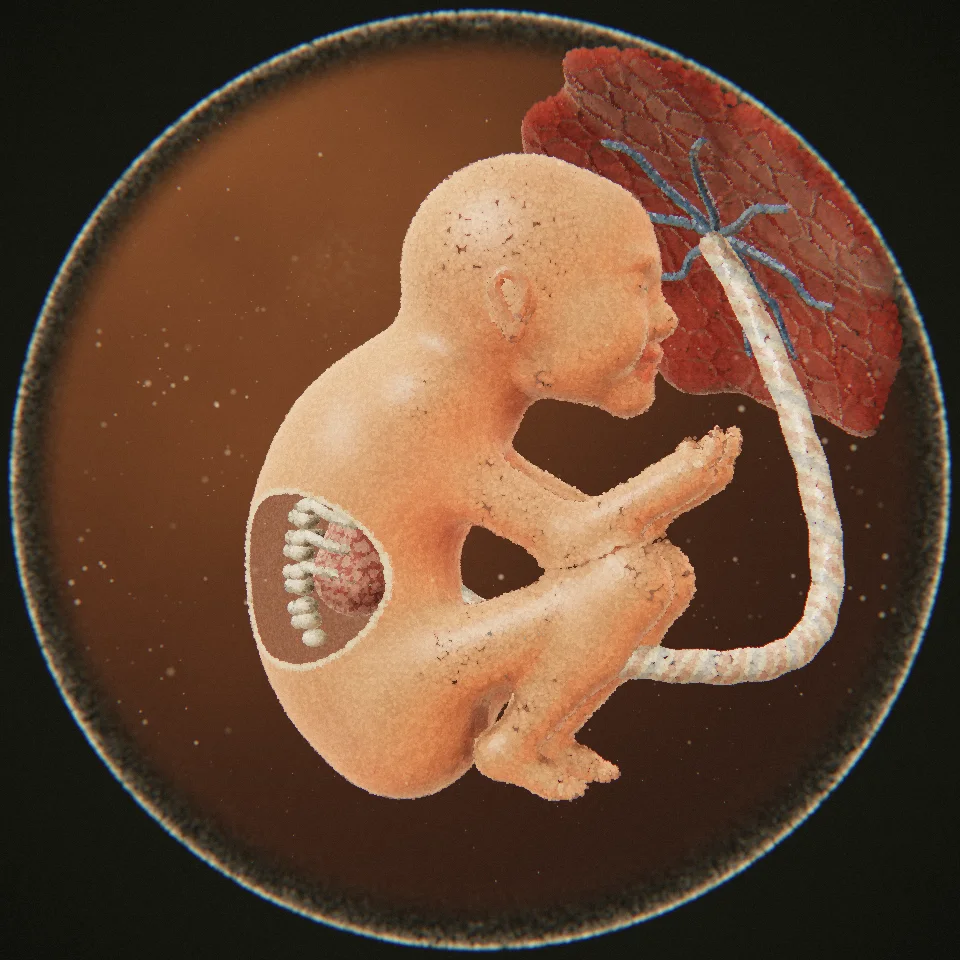
Your baby is about 36.6 cm from head to heel, roughly the size of a cauliflower1. The WHO median estimated fetal weight for this week is 1,039 g2.
A few weeks ago their skin was wrinkled, a bit like a prune. Now those folds are filling out with fat and your baby is getting plumper by the day. All their organs are maturing as they get ready for life outside the womb1.
The lungs are formed but not yet ready to function outside the uterus3.
This is the last week of your second trimester. You’re two-thirds of the way there, and next week the third and final trimester begins1.
Your body
You’re probably putting on a few pounds now and may feel bloated and constipated. That’s partly because your growing baby is squeezing your stomach and partly down to progesterone, the pregnancy hormone1.
You may be feeling tired too, so nap when you can. You might also be snoring more, because your nasal passages swell and get blocked more easily in pregnancy1.
Backache, heartburn, leg cramps, swollen hands and feet, piles and dizziness are also common1.
Health and tips
Easing bloating and constipation. Drink plenty of water, choose wholemeal bread and wholewheat pasta, and eat lots of fresh fruit and veg1.
Sleeping on your side. After week 28, research suggests that sleeping on your back can double the risk of stillbirth, so going to sleep on your side is better. To get comfortable1:
- Support your bump with a pillow.
- Keep your knees and legs bent.
- Put another pillow between your legs.
- If you wake up on your back, don’t worry. Just roll onto your side again.
Flying. This is probably the last week you can fly without a fitness-to-fly note. After this, many airlines want a note from your midwife or doctor confirming your pregnancy is uncomplicated. Check the cut-off dates with your airline1.
Whooping cough vaccine. Whooping cough is dangerous for babies, and having the vaccine in pregnancy helps protect yours. In the UK it’s usually offered around week 20, but you can have it from week 16 to week 32. If you haven’t had it yet, talk to your midwife1. The CDC recommends Tdap between weeks 27 and 364; the schedule varies by country5.
Work. You shouldn’t be lifting heavy things, and you may need extra breaks and somewhere to sit1.
Pelvic floor. This is a good time to strengthen it. Gentle exercises help prevent leaks when you laugh, sneeze or cough. To find the right muscles, imagine you’re having a pee and stopping midflow1.
Where to give birth. Now is a good time to start thinking about it. You can also ask your midwife about antenatal classes. Even if you’ve had children before, they’re worth it: you’ll meet other parents-to-be1.
For your partner or supporter
Towards the end of pregnancy, roughly weeks 27 to 40, the baby can feel very heavy. The tiredness and irritability of the early weeks often come back, and the birth may start to feel frightening6.
If you’re her partner or the person supporting her, here’s how you can help6:
- If she seems anxious, encourage her to talk to her midwife, to you, or to family and friends. It may take a while for her to open up, so be patient.
- Do the heavy shopping and share the housework.
- Find out about antenatal classes for couples. The more you know about labour, the more you can help.
When to get help
Get medical advice about any vaginal bleeding1. Get urgent help if the bleeding is heavy, if you have severe tummy or shoulder pain, or if you feel dizzy or faint7.
Go to the emergency department or call your maternity unit if you have a severe headache that doesn’t go away with painkillers, vision problems such as blurring or flashing lights, pain below your ribs, or sudden swelling of your face, hands or feet. These can be signs of pre-eclampsia8.
From week 24 you should feel your baby move every day. To check, Hospital Clínic in Barcelona suggests lying on your left side after a main meal and counting at least 10 movements in two hours9.
If you’re feeling anxious or low, or worried about your relationship, money or housing, don’t keep it to yourself. Talk to your midwife or doctor1.
Frequently asked questions
How big is the fetus at week 27 of pregnancy?
According to the NHS, it is about 36.6 cm, head to heel. The WHO median estimated weight is 1,039 g.
Why sleep on your side late in pregnancy?
After week 28, research suggests sleeping on your back can double the risk of stillbirth.
Can I fly at 27 weeks pregnant?
Usually yes, but from now on many airlines ask for a note from your midwife or doctor confirming your pregnancy is going well. Check their cut-off dates.
Sources
- National Health Service (NHS), Regne Unit. 27 weeks pregnant guide. NHS Best Start in Life.
- World Health Organization (Kiserud T, et al.). The World Health Organization Fetal Growth Charts: A Multinational Longitudinal Study of Ultrasound Biometric Measurements and Estimated Fetal Weight. PLoS Med 2017;14(1):e1002220.
- American College of Obstetricians and Gynecologists (ACOG). How Your Fetus Grows During Pregnancy (FAQ156). Darrera revisió: març de 2026.
- Centers for Disease Control and Prevention (CDC). Tdap vaccination during pregnancy. cdc.gov.
- National Health Service (NHS), Regne Unit. Week-by-week guide to pregnancy. nhs.uk.
- NHS 111 Wales. Dads and partners. 111.wales.nhs.uk.
- National Health Service (NHS), Regne Unit. Vaginal bleeding in pregnancy. nhs.uk.
- National Health Service (NHS), Regne Unit. Pre-eclampsia. nhs.uk.
- Hospital Clínic de Barcelona. Pregnancy and Childbirth: alarm signs. clinicbarcelona.org.