Everything here is written from scientific sources. If you have any doubts, check the original sources.
Your baby this week
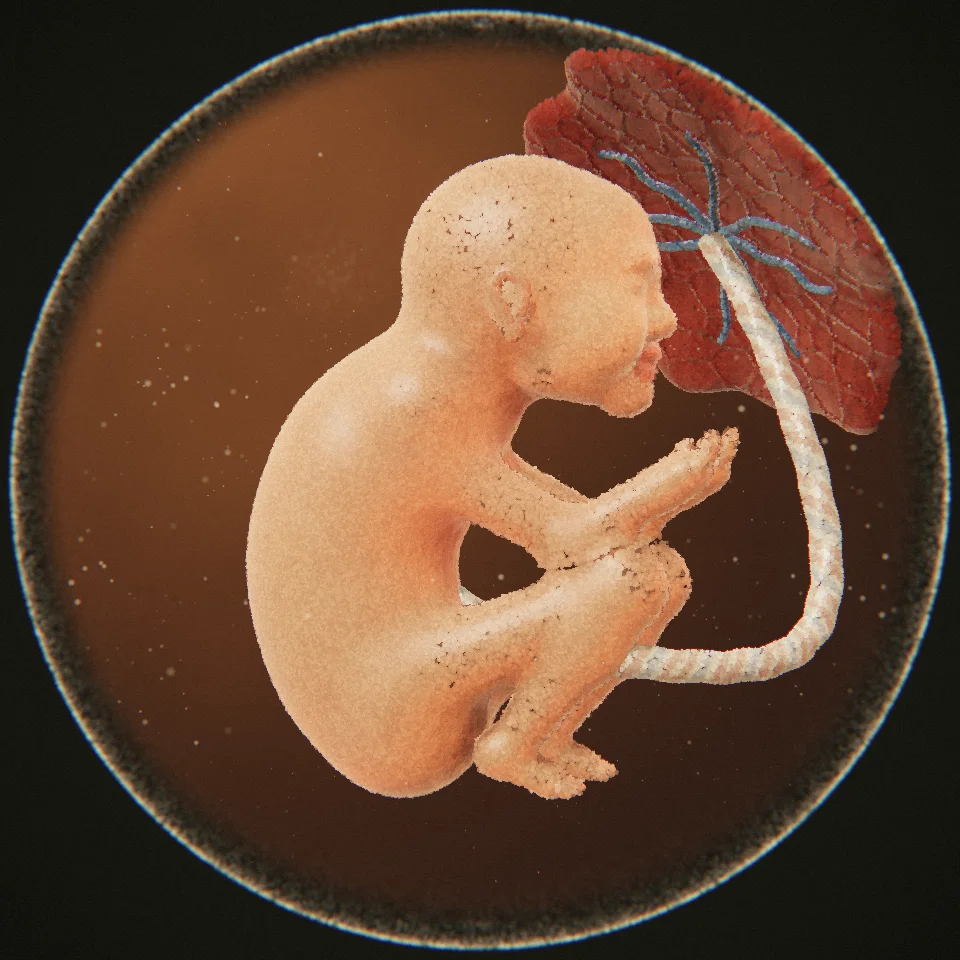
Your baby is about 35.6 cm from head to heel, like a cucumber1. The WHO median estimated fetal weight for this week is 902 g2.
Around now, your baby’s eyes open for the first time, and the next trick will be learning to blink1. ACOG places the ability to open and close the eyelids between weeks 25 and 283.
It is a myth that all babies are born with blue eyes. The colour depends on the parents’ genetics, and brown is very common. You will not know the permanent colour for a while: it has usually settled by age 3, although it can keep changing into adulthood1.
There is a lot of activity going on inside your bump at the moment1.
Your body
As you approach the third trimester, you may feel more tired and a bit clumsier. That is understandable: you are carrying extra weight, and your growing bump has shifted your centre of gravity, which affects your balance. You may need more time for everyday things, like your walk to the bus stop. It is important to stay active, but your body keeps changing, so be patient with yourself1.
You may also be getting more leg cramps, especially at night1.
Other common symptoms at this stage include trouble sleeping, backache, heartburn, constipation, dizziness, and swollen hands and feet1.
Health and tips
Leg cramps. Try foot and ankle exercises. Pulling your toes upwards or rubbing the muscle where it hurts can also help1.
So-called “baby brain”. If you are more forgetful and keep losing your keys, you may have what some people call “baby brain”. The NHS says it is not a medical condition or scientifically proven. It could be down to tiredness and having a lot on your mind1.
Work. You can ask for a risk assessment of your workplace to make sure you are working in a safe environment. You should not be lifting heavy things, and you may need extra breaks and somewhere to sit1.
Benefits. This is a good time to check what benefits you and your partner may be entitled to1.
Vaccines. To give your baby the best protection, the whooping cough vaccine should be given before week 32. If you miss it, you can still have it later. Around week 28 you will also be offered the RSV (respiratory syncytial virus) vaccine, which protects your baby against severe RSV for their first 6 months4.
Moving. The recommendation is 150 minutes of exercise a week, and you can start with a brisk 10-minute walk each day. Listen to your body and do what feels right1.
Contraception. Start thinking now about which method you would like to use after the birth. Too short a gap between pregnancies is known to cause problems. Your midwife or doctor can help you decide1.
For your partner or supporter
Towards the end of pregnancy, from around week 27, the baby can feel very heavy. The tiredness and irritability of the early weeks often return, and she may start to feel frightened about the birth5.
If she seems anxious, encourage her to talk about it to her midwife, to you or to family and friends. It may take a while before she opens up, so be patient5.
At home, keep sharing the housework and take on the heavy shopping, as lifting puts a strain on her back5.
If money is a worry, it can help to look at what benefits you are entitled to and plan ahead5.
When to get help
If you think your baby’s movements have slowed down or stopped, contact your midwife or maternity unit straight away1.
Itching is common in pregnancy and usually not serious. But get urgent medical help if your skin is very itchy, if the palms of your hands or soles of your feet itch, or if the itching is worse at night. These can be signs of a liver condition, intrahepatic cholestasis of pregnancy, which needs treatment6.
Get urgent medical help too if you have signs of pre-eclampsia, such as a severe headache that does not go away with painkillers, vision problems, pain below the ribs or sudden swelling of your face, hands or feet7. The same applies if you are bleeding heavily, have severe tummy pain or feel faint8.
Frequently asked questions
How big is the fetus at week 26 of pregnancy?
According to the NHS, it is about 35.6 cm, head to heel. The WHO median estimated weight is 902 g.
Is baby brain real?
According to the NHS, it is not a medical condition or scientifically proven. Tiredness may explain it.
How can leg cramps be eased?
Try pulling your toes upwards, doing foot and ankle exercises or rubbing the muscle that hurts.
Sources
- National Health Service (NHS), Regne Unit. 26 weeks pregnant guide. NHS Best Start in Life.
- World Health Organization (Kiserud T, et al.). The World Health Organization Fetal Growth Charts: A Multinational Longitudinal Study of Ultrasound Biometric Measurements and Estimated Fetal Weight. PLoS Med 2017;14(1):e1002220.
- American College of Obstetricians and Gynecologists (ACOG). How Your Fetus Grows During Pregnancy (FAQ156). Darrera revisió: març de 2026.
- National Health Service (NHS), Regne Unit. Vaccinations in pregnancy. nhs.uk.
- NHS 111 Wales. Dads and partners. 111.wales.nhs.uk.
- National Health Service (NHS), Regne Unit. Itching and intrahepatic cholestasis of pregnancy. nhs.uk.
- National Health Service (NHS), Regne Unit. Pre-eclampsia. nhs.uk.
- National Health Service (NHS), Regne Unit. Vaginal bleeding in pregnancy. nhs.uk.
- Hospital Clínic de Barcelona. Pregnancy and Childbirth: alarm signs. clinicbarcelona.org.