Everything here is written from scientific sources. If you have any doubts, check the original sources.
Your baby this week
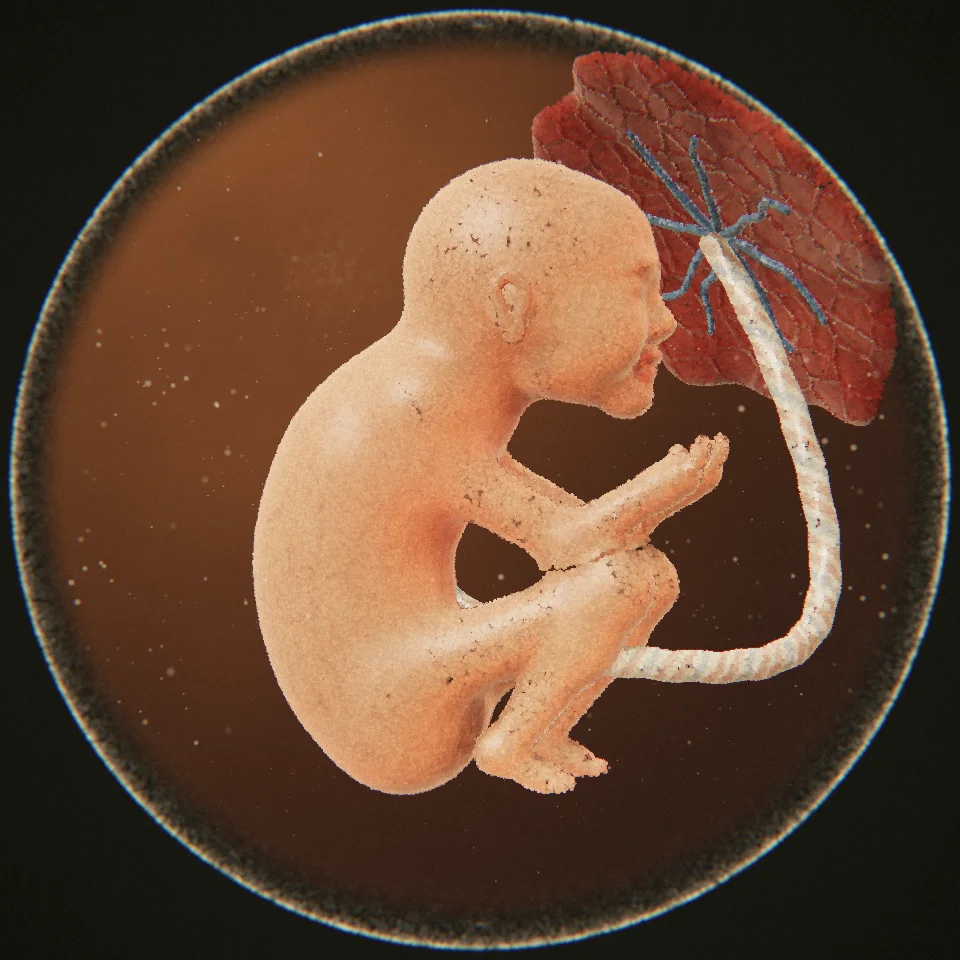
Your baby is about 28.9 cm from head to heel, like a large mango1. The WHO median estimated fetal weight for this week is 565 g2.
Week by week, your baby is reaching new milestones in preparing for life outside the womb. They are practising breathing and getting into patterns of sleeping and waking1.
The limbs are now in proportion. Over the next few weeks you will feel more kicks, and you may even see your tummy move, which can feel very strange1.
It is worth getting to know your baby’s rhythms: when they tend to be active and how they move. That makes it easier to notice if something changes1.
Your body
Your breasts may start leaking colostrum, an early type of milk. Breast milk gives your baby a good start by boosting their immunity against infections1.
You may also get rib pain as your rib cage expands to make room for your bump. You could feel a bit more breathless than usual, as the baby presses on your lungs. The best remedy is to put your feet up and relax1.
Other second-trimester symptoms are common at this stage1:
- Tiredness and trouble sleeping.
- Pain at the sides of your bump as your womb grows.
- Backache, headaches and nosebleeds.
- Heartburn, bloating and constipation.
- Leg cramps, dizziness, and swollen hands and feet.
Health and tips
Sun safety. Your skin is more sensitive in pregnancy and burns more easily, even on a cloudy day. Cover up and stay in the shade when the sun is strongest, between 11am and 3pm from March to October. Use a suncream of factor 15 or higher with good UVA protection, and apply a thick layer to all exposed skin1.
Caffeine. If you drink a lot of tea and coffee, this week you could make a real effort to swap some of it for smoothies or fruit teas1. Try not to smoke or drink alcohol either1.
Emotional wellbeing. Looking after your mental health matters before, during and after pregnancy. If you feel anxious or low, talk to your midwife or doctor, who can point you to the support you need. You can also share how you feel with your partner, friends or family. You may be worried about your relationship, money or having somewhere stable to live. Do not keep it to yourself1. Anxiety and depression in pregnancy can often be helped with a talking therapy3.
Pelvic floor. Gentle exercises help prevent leaks when you laugh, sneeze or cough. To find the right muscles, imagine stopping your wee midflow1.
Whooping cough vaccine. If you have not had it yet, ask your midwife or doctor. It is usually offered around week 20, but you can have it any time from week 16 to week 321.
Moving and eating well. The recommendation is 150 minutes of exercise a week, and you can start with a brisk 10-minute walk each day. You do not need extra calories until the third trimester, from week 281.
If you have experienced a loss. Not every pregnancy goes to plan. If you have lost a baby, there are trained people who can support you through grief1.
For your partner or supporter
She may be the one carrying the baby, but the pregnancy affects you too. It is normal to have mixed feelings, whether the pregnancy was long planned or not. A baby changes your life, and change can be frightening4.
If money is a worry, it can help to look at what benefits you are entitled to and start planning ahead4.
As for sex, there is usually no medical reason to avoid it during pregnancy. Keep in mind that it is best avoided if there is any bleeding or pain, and that you may need to try different positions so she is comfortable. If you are not having sex, find other ways of being close, and talk about it4.
When to get help
If the kicking slows down, talk to your midwife1. If any symptom worries you, check with your midwife or doctor too1.
Get urgent medical help if you are bleeding heavily, if you have severe tummy or shoulder pain, or if you feel dizzy or faint5.
From week 20, watch out for pre-eclampsia. Get urgent medical help if you have a severe headache that does not go away with painkillers, vision problems, pain below the ribs or sudden swelling of your face, hands or feet6.
Frequently asked questions
How big is the fetus at week 23 of pregnancy?
According to the NHS, it is about 28.9 cm, head to heel. The WHO median estimated weight is 565 g.
Is skin more sensitive to the sun in pregnancy?
Yes, it burns more easily, even on a cloudy day.
Is it normal for my breasts to leak at week 23?
Yes. Your breasts may leak a little colostrum, the first milk.
Sources
- National Health Service (NHS), Regne Unit. 23 weeks pregnant guide. NHS Best Start in Life.
- World Health Organization (Kiserud T, et al.). The World Health Organization Fetal Growth Charts: A Multinational Longitudinal Study of Ultrasound Biometric Measurements and Estimated Fetal Weight. PLoS Med 2017;14(1):e1002220.
- National Health Service (NHS), Regne Unit. Mental health in pregnancy. nhs.uk.
- NHS 111 Wales. Dads and partners. 111.wales.nhs.uk.
- National Health Service (NHS), Regne Unit. Vaginal bleeding in pregnancy. nhs.uk.
- National Health Service (NHS), Regne Unit. Pre-eclampsia. nhs.uk.
- Hospital Clínic de Barcelona. Pregnancy and Childbirth: alarm signs. clinicbarcelona.org.