Everything here is written from scientific sources. If you have any doubts, check the original sources.
Your baby this week
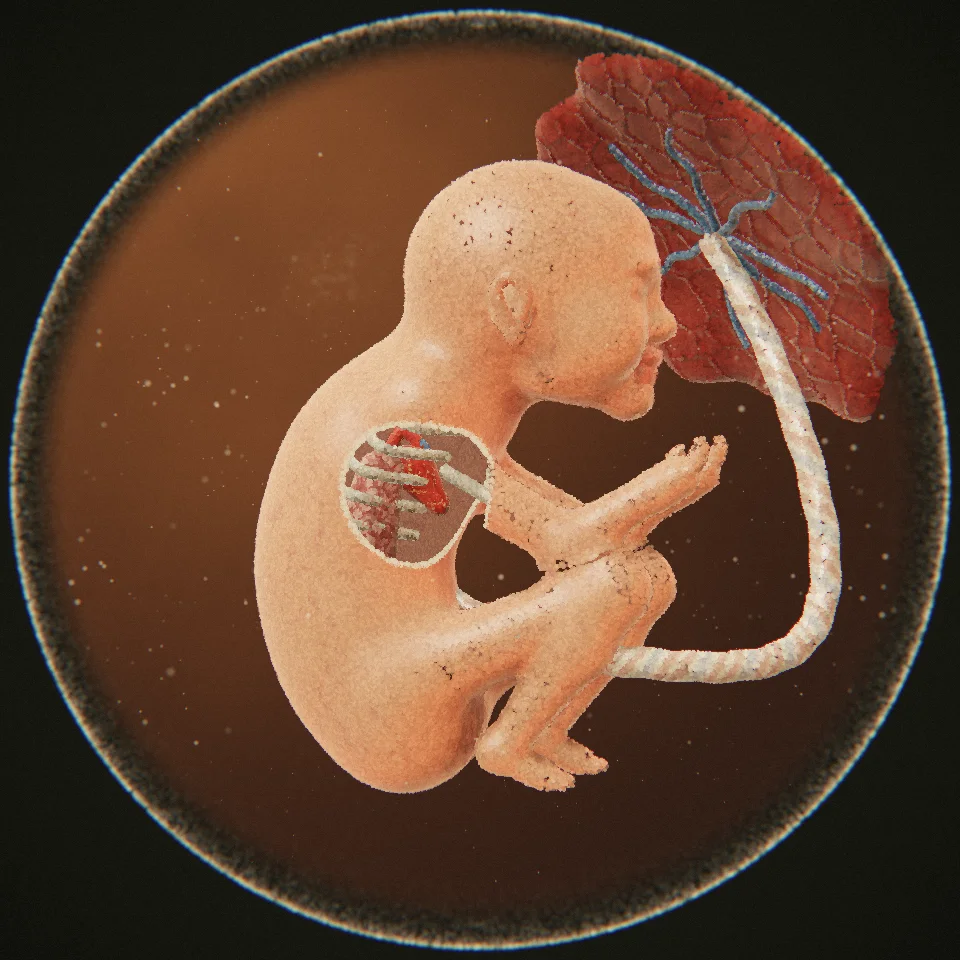
Your baby is about 27.8 cm from head to heel, roughly the size of a sweet potato1. The WHO median estimated fetal weight for this week is 476 g2.
The lungs are developing, and your baby is doing some breathing practice in the womb. They are also swallowing small amounts of amniotic fluid. This usually stays in the bowels and comes out after the birth as a first dark, sticky poo called meconium1.
The taste buds are forming and could be influenced by what you eat. That is a good reason to eat healthily, with plenty of fresh fruit and veg1. Around this stage, fat also builds up under the skin and the future fingerprints form3.
This is a good week to talk to your bump, sing to it or stroke it while you put on moisturiser. You may even feel a little flutter in response. It is all part of bonding with your baby1.
Your body
Stretch marks may start to appear. They look like lines or streaks on the skin, usually on your tummy, upper thighs or breasts. They are harmless and usually fade after the birth1.
Other symptoms are common at this stage of the second trimester1:
- Tiredness, trouble sleeping and bleeding gums.
- Pain at the sides of your bump as your womb grows.
- Backache, headaches and nosebleeds.
- Heartburn, bloating and constipation.
- Leg cramps, dizziness, and swollen hands and feet.
Aches and pains are common, but it can be hard to know what is serious. If anything worries you, talk to your midwife or doctor1.
Health and tips
Smoking. Smoking starves your baby of oxygen and increases the risk of miscarriage, stillbirth and sudden infant death. This is a crucial stage, because the lungs are forming. Ask your midwife or doctor about stop-smoking services near you1. Try to give up alcohol too, and go easy on coffee, tea and other drinks with caffeine1.
Piles. Piles are swellings inside or around your bottom. They can itch or feel sore, and it can hurt when you poo1.
Whooping cough vaccine. It is usually offered around week 20, but you can have it any time from week 16 to week 32. The vaccine protects your baby from this dangerous illness. If you have not had it yet, speak to your midwife or doctor1.
Pelvic floor. This is a good time to work on it. Gentle exercises help prevent leaks when you laugh, sneeze or cough. To find the right muscles, imagine you are having a wee and stopping midflow1.
Vitamin D. It helps keep bones and muscles healthy. From October to early March we cannot make enough from sunlight, so it is worth taking a 10 microgram supplement every day1.
Eating and moving. There is no need to eat for 2 or add calories until the third trimester, which starts at week 28. The recommendation is 150 minutes of exercise a week. You could start with a brisk 10-minute walk each day and listen to your body1.
Work. Once you have told your employer, you can ask for a risk assessment of your workplace1. Exact rights and deadlines depend on the country.
For your partner or supporter
Antenatal classes are for you too: a partner or supporter can take part, and the midwife or doctor may be able to recommend one1. The more you know about labour, the more you can help4.
If you are the one offering support, simple things go a long way4:
- Share the housework, if you do not already.
- Carry the heavy shopping, as lifting puts a strain on her back.
- If you smoke, get help to stop and, in the meantime, do not smoke near her.
- Go to appointments and scans whenever you can.
When to get help
If you are in severe pain or bleeding from your vagina, call your midwife or maternity unit straight away1. Get urgent medical help if the bleeding is heavy, if you have severe tummy or shoulder pain, or if you feel dizzy or faint5.
From week 20, watch out for pre-eclampsia. Get urgent medical help if you have a severe headache that does not go away with painkillers, vision problems, pain below the ribs or sudden swelling of your face, hands or feet6.
If you feel anxious or low, tell your midwife or doctor. They are there to support you7.
Frequently asked questions
How big is the fetus at week 22 of pregnancy?
According to the NHS, it is about 27.8 cm, head to heel. The WHO median estimated weight is 476 g.
Why is quitting smoking important at this stage?
Smoking reduces the oxygen reaching the baby and raises the risk of miscarriage and stillbirth.
When is the whooping cough vaccine given?
It is usually offered around week 20, but you can have it any time from week 16 to week 32. If you have not had it yet, ask your midwife.
Sources
- National Health Service (NHS), Regne Unit. 22 weeks pregnant guide. NHS Best Start in Life.
- World Health Organization (Kiserud T, et al.). The World Health Organization Fetal Growth Charts: A Multinational Longitudinal Study of Ultrasound Biometric Measurements and Estimated Fetal Weight. PLoS Med 2017;14(1):e1002220.
- American College of Obstetricians and Gynecologists (ACOG). How Your Fetus Grows During Pregnancy (FAQ156). Darrera revisió: març de 2026.
- NHS 111 Wales. Dads and partners. 111.wales.nhs.uk.
- National Health Service (NHS), Regne Unit. Vaginal bleeding in pregnancy. nhs.uk.
- National Health Service (NHS), Regne Unit. Pre-eclampsia. nhs.uk.
- National Health Service (NHS), Regne Unit. Mental health in pregnancy. nhs.uk.
- Hospital Clínic de Barcelona. Pregnancy and Childbirth: alarm signs. clinicbarcelona.org.