Everything here is written from scientific sources. If you have any doubts, check the original sources.
Your baby this week
The second half of pregnancy begins, a period of rapid growth. Your baby is getting ready for life outside the womb and developing essential skills such as sucking and breathing1.
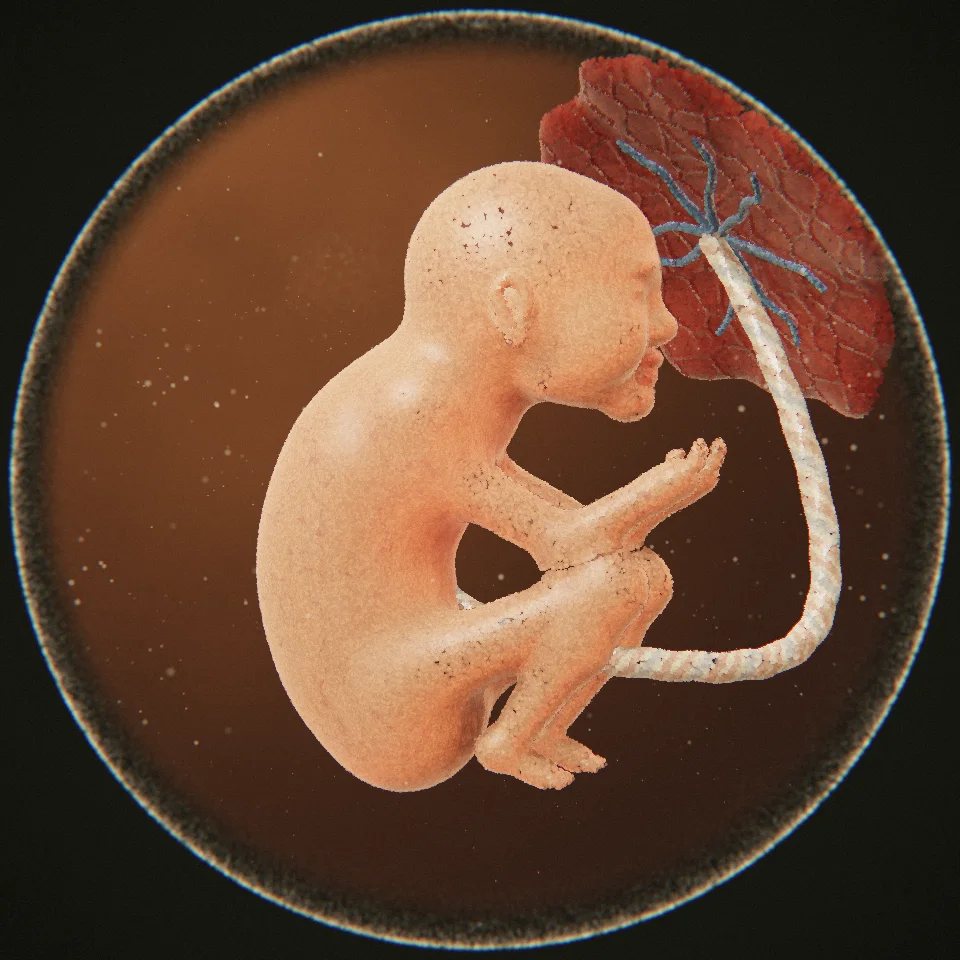
The fetus is about 26.7 cm from head to heel, roughly the size of a carrot, and now weighs more than the placenta. The placenta provides food and removes waste, and it will keep growing until the end of pregnancy1. The WHO median estimated fetal weight for this week is 398 g2.
Your baby’s body is covered in fine, soft hair called lanugo, which probably helps keep them at the right temperature and usually disappears before birth. Their hair and eyebrows are growing too1.
They can now hear noises and voices from outside the womb. If you sing to your bump, however it sounds, they will be your biggest fan1.
Your body
You may feel a little unsteady as your bump grows. This is because your centre of gravity has shifted and your joints are looser1.
Your baby is moving a lot and starting to settle into patterns of sleeping and waking. The catch is that they may be wide awake just when you want to sleep. Have naps when you can to make up for lost sleep1.
Common symptoms at this stage include1:
- Tiredness and trouble sleeping.
- Backache.
- Piles.
- Pain on the sides of your bump as your womb grows.
- Constipation, indigestion and heartburn.
- Leg cramps, dizziness and swollen hands and feet.
- Sore or leaky breasts.
Health and tips
Eating well. A diet with plenty of fresh fruit and vegetables gives you more energy than junk food. According to the NHS, if you eat well, your baby will too, and you are both less likely to develop conditions like diabetes1. Aim for 5 portions of fruit and veg a day and, when you have the choice, go for wholegrain, low-fat and low-sugar options. Swapping takeaways for homemade versions is an easy place to start1.
Whooping cough vaccine. Timing varies by country. The UK offers it around week 203, though you can have it from week 16 to week 32; if you have not had it yet, the NHS advises speaking to your midwife or doctor1. In the US it is given between weeks 27 and 364. Ask which schedule applies to you.
If your scan brought unexpected news. Pregnancy can be a happy time, but it can also be stressful, with difficult decisions to make. If your anomaly scan brought news you were not expecting, it is natural to feel very worried. Talk through your options with your midwife or doctor1.
Antenatal classes. Ask your midwife about antenatal classes, and ask your partner or supporter if they would like to come along1.
Staying active. The recommendation is 150 minutes of exercise a week. If you are not active, you could start with a 10-minute brisk walk each day and listen to your body1.
For your partner or supporter
If you are her partner or the person supporting her, this is a good time to sign up for antenatal classes together, or for sessions aimed at partners. The more you know about labour, the more you can help5.
If extra tests are needed after the scan, your support is especially important. If she is anxious, encourage her to talk to her midwife, to you or to family and friends, and be patient: it may take a while for her to open up5.
You can also keep sharing the housework and carrying the heavy shopping yourself5.
When to get help
If you have a fall, try not to panic, as your baby is well protected, but let your midwife know as soon as possible1.
Pre-eclampsia is most likely from 20 weeks. Get urgent medical help if you have a severe headache that does not go away with painkillers, vision problems, pain below the ribs, or sudden swelling of the face, hands or feet6.
Get advice about any bleeding. Go to the emergency department if it is heavy, if you have severe tummy or shoulder pain, or if you feel dizzy or faint7.
Frequently asked questions
How big is the fetus at week 21 of pregnancy?
According to the NHS, it is about 26.7 cm, head to heel. The WHO median estimated weight is 398 g.
How much fruit and veg should I eat in pregnancy?
The NHS recommends about 5 portions a day.
What should I do if I fall during pregnancy?
Try not to panic, as your baby is well protected, but let your midwife know as soon as possible.
Sources
- National Health Service (NHS), Regne Unit. 21 weeks pregnant guide. NHS Best Start in Life.
- World Health Organization (Kiserud T, et al.). The World Health Organization Fetal Growth Charts: A Multinational Longitudinal Study of Ultrasound Biometric Measurements and Estimated Fetal Weight. PLoS Med 2017;14(1):e1002220.
- National Health Service (NHS), Regne Unit. Week-by-week guide to pregnancy. nhs.uk.
- Centers for Disease Control and Prevention (CDC). Tdap vaccination during pregnancy. cdc.gov.
- NHS 111 Wales. Dads and partners. 111.wales.nhs.uk.
- National Health Service (NHS), Regne Unit. Pre-eclampsia. nhs.uk.
- National Health Service (NHS), Regne Unit. Vaginal bleeding in pregnancy. nhs.uk.
- Hospital Clínic de Barcelona. Pregnancy and Childbirth: alarm signs. clinicbarcelona.org.