Everything here is written from scientific sources. If you have any doubts, check the original sources.
Your baby this week
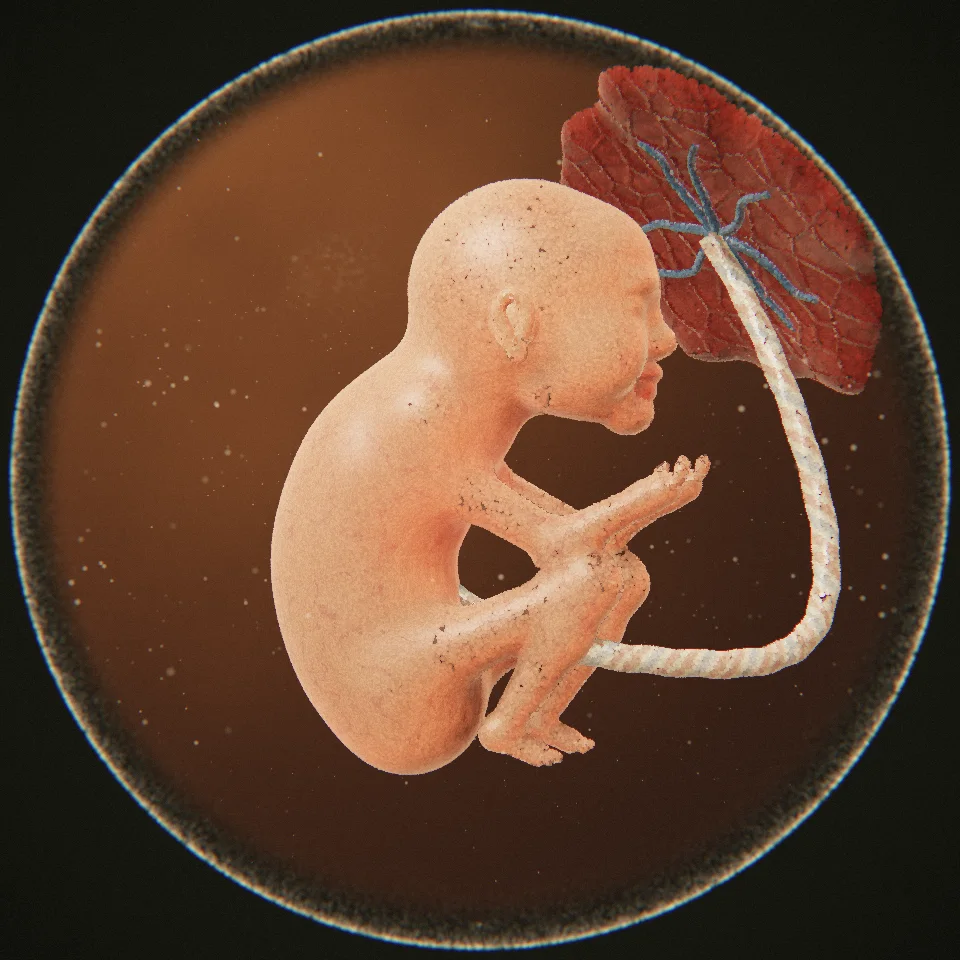
Your baby is about 10.1 cm from head to bottom, roughly the size of an apple1. The WHO median estimated fetal weight for this week is 114 g2.
A soft layer of hair called lanugo is growing all over the body, and the eyebrows and eyelashes are starting to develop. The eyes are already sensitive to light1.
Around now your baby starts to hear too. If you talk to your baby, they will probably hear you. They can also hear your heartbeat and the noises of your digestive system1.
Your baby is growing quickly, surrounded by the amniotic sac and fluid, with the placenta as their food supply1.
Your body
You may feel fine now, but as your bump grows you’ll become less steady on your feet. Take care when you’re out and about or on public transport, and if you can’t find a seat, don’t be shy about asking for one1.
You may get jabbing pains on the sides of your bump. This is round ligament pain, and putting your feet up and resting can help1.
Your skin might feel a bit itchy too. An unperfumed moisturiser, loose cotton clothing and a cool bath may help1.
Other second-trimester symptoms are still common: bleeding gums, nosebleeds, bloating, constipation, heartburn, leg cramps and swollen hands and feet1.
Health and tips
Vaginal discharge. It’s common to have more, because more blood is flowing around your pelvic area. This milky fluid, called leucorrhoea, keeps the vagina clean and free from infection. It should be clear, white or creamy and smell only slightly musky. See your doctor or midwife if1:
- It changes colour.
- It smells bad, for example of fish.
- It changes texture, for example going frothy or looking like cottage cheese.
- It hurts when you pee.
- You feel itchy or sore.
Thrush. If you have a vaginal infection, it’s most likely to be thrush, a common yeast infection. Signs include lumpy white discharge, itching around the vagina and stinging when you pee or have sex. To help prevent it, wear loose cotton underwear, use unperfumed soap and avoid sex until it has cleared up1.
Itching. It is usually caused by hormone changes and your skin stretching, and it normally stops after the birth. To ease it, try patting or tapping your skin instead of scratching, have cool or warm (not hot) baths or showers of no more than 20 minutes, and keep your nails short. Avoid perfumed soaps and deodorants, and don’t have too much spicy food or caffeine. A pharmacist can suggest creams and antihistamines that are safe in pregnancy3.
Pelvic floor. This is a good time to tone it with gentle exercises, which can help prevent leaks when you laugh, sneeze or cough1.
Vitamin D. Between October and early March, the NHS advises considering a daily 10 microgram supplement, because we can’t make enough from sunlight1.
For your partner or supporter
If you are the partner or the person supporting her, now is the time to share the housework if you don’t already. Carrying the heavy shopping yourself saves a lot of strain on her back4.
Eating well is easier if you do it together, and it helps to know which foods to avoid in pregnancy. If you smoke, get support to stop, and if you carry on, don’t smoke near her4.
Her body is changing. If you find that hard too, talk about it sensitively, because she may well feel uneasy about the changes herself4.
When to get help
See your doctor or midwife if your discharge changes colour, smell or texture, or if it hurts when you pee1.
Get urgent help if your skin is very itchy, for example if it keeps you awake at night, if the palms of your hands or soles of your feet are itchy, or if the itching is worse at night. These could be signs of intrahepatic cholestasis of pregnancy, a liver condition that needs treatment3.
Always get any bleeding checked1. Go to the emergency department if it is heavy, if you have severe tummy or shoulder pain, or if you feel dizzy or faint5.
Frequently asked questions
How big is the fetus at week 15 of pregnancy?
According to the NHS, it is about 10.1 cm, head to bottom. The WHO median estimated weight is 114 g.
When should I get vaginal discharge checked in pregnancy?
If it changes colour, smells bad or changes texture.
Is itchy skin normal in pregnancy?
Yes, it is common and usually mild. But if the itching is intense, worse at night or affects the palms of your hands or soles of your feet, get urgent help.
Sources
- National Health Service (NHS), Regne Unit. 15 weeks pregnant guide. NHS Best Start in Life.
- World Health Organization (Kiserud T, et al.). The World Health Organization Fetal Growth Charts: A Multinational Longitudinal Study of Ultrasound Biometric Measurements and Estimated Fetal Weight. PLoS Med 2017;14(1):e1002220.
- National Health Service (NHS), Regne Unit. Itching and intrahepatic cholestasis of pregnancy. nhs.uk.
- NHS 111 Wales. Dads and partners. 111.wales.nhs.uk.
- National Health Service (NHS), Regne Unit. Vaginal bleeding in pregnancy. nhs.uk.
- Hospital Clínic de Barcelona. Pregnancy and Childbirth: alarm signs. clinicbarcelona.org.