Everything here is written from scientific sources. If you have any doubts, check the original sources.
Your baby this week
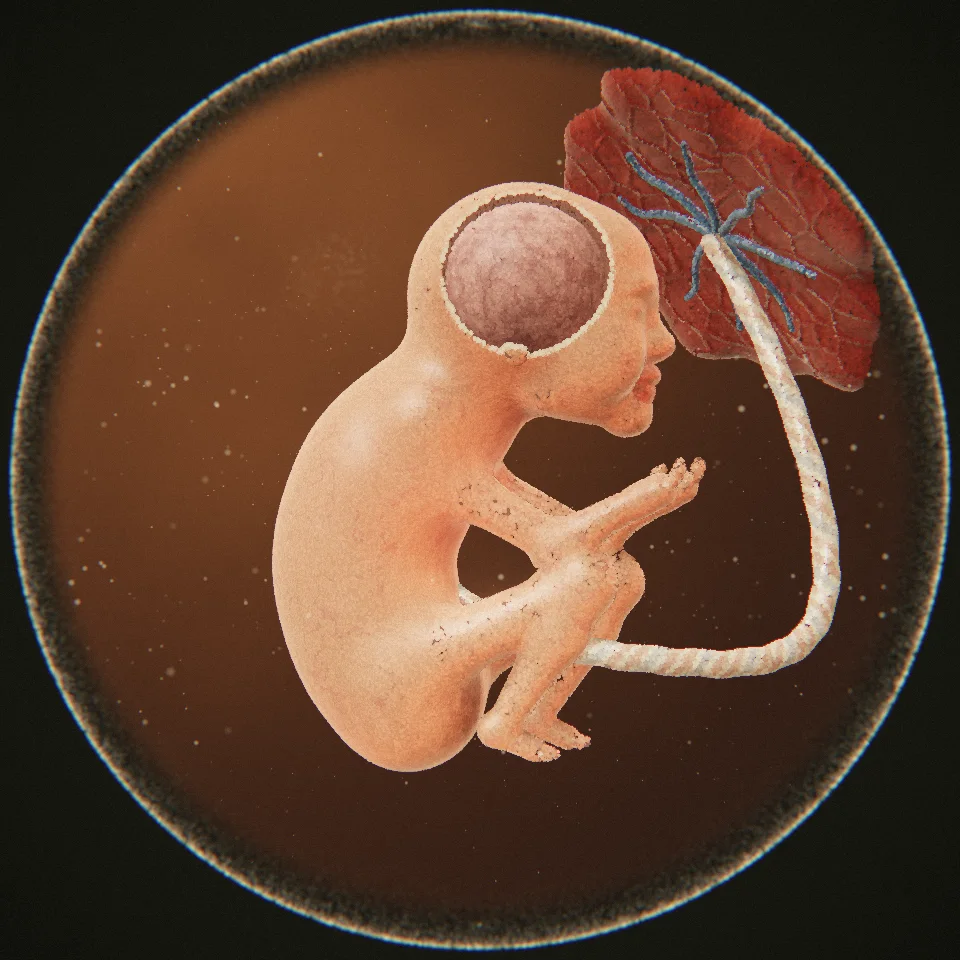
Your baby is about 8.5 cm from head to bottom, roughly the size of a kiwi fruit. The head is getting rounder and more in proportion with the rest of the body1. The WHO median estimated fetal weight for this week is 90 g2.
Your baby is kicking around, though you probably won’t feel it yet. At an appointment, your midwife may be able to hear the heartbeat with a handheld monitor on your tummy1.
Your baby is also having a wee. Small amounts of amniotic fluid are swallowed into the stomach, and the kidneys pass the fluid back out as urine1.
By about week 14, sex can be identified on ultrasound3.
Your body
Hopefully tiredness and sickness are easing, and as your energy returns your appetite may too. Your baby doesn’t need any extra calories yet, and gaining too much weight isn’t good for either of you. If you’re hungry between meals, stick to healthy snacks1.
The placenta is firmly attached to your womb and linked to your baby through the umbilical cord. Full of blood, it supplies nutrients, oxygen and hormones, and removes waste such as carbon dioxide. Your blood and your baby’s come into close contact there but do not mix, because you might have different blood groups1.
You may notice yellow stains in your bra. This is probably colostrum, the first milk your body produces1.
Bleeding gums, pains on the sides of your bump, headaches, constipation, heartburn, leg cramps and feeling hot are also common1.
Health and tips
How to sleep. In early pregnancy it is fine to sleep on your stomach. In the third trimester, after 28 weeks, it is safest to go to sleep on your side, as this helps reduce the risk of stillbirth. This applies at night, after waking and for naps. Don’t worry if you wake up on your back: just turn onto your side and go back to sleep1.
Screening. If you haven’t had combined screening, after this week Catalonia’s programme offers second-trimester screening4.
Exercise. Now that you have more energy, it’s a good time to get moving. Aim for 150 minutes of moderate activity a week, including 2 sessions of muscle strengthening. Moderate means you can talk but not sing. Walking, swimming and yoga all count. Don’t start a new vigorous activity such as running, and avoid sports with a risk of falling or being hit in the tummy, as well as scuba diving5.
Pelvic floor. Gentle exercises can help prevent leaks when you laugh, sneeze or cough. To find the muscles, imagine you are peeing and stopping midflow1.
Smoking, alcohol and caffeine. Do your best to stop smoking and give up alcohol, and go easy on drinks with caffeine. Your midwife or doctor can help1.
Talking. Pregnancy brings all kinds of worries, and relationships can come under strain. Talk about your feelings, and if you feel you’re not coping, tell your midwife or doctor1.
For your partner or supporter
After around week 14, many pregnant women find much of their energy returns, and she may not want special treatment any more6.
It’s normal for both of you to have mixed feelings, even if the pregnancy was very much wanted. A baby means new responsibilities, and money worries may come up too: less income for a while, new costs or the cost of childcare. It can help to look at what support you’re entitled to and start planning ahead6.
When to get help
If you’re worried about any changes in your breasts, ask your midwife or doctor to have a look1.
Always get any bleeding checked1. Get urgent help if it is heavy, if you have severe tummy or shoulder pain, or if you feel dizzy or faint7.
If you feel anxious or low, or you’re worried about your mental health, speak to your maternity unit or GP8.
Frequently asked questions
How big is the fetus at week 14 of pregnancy?
According to the NHS, it is about 8.5 cm, head to bottom. The WHO median estimated weight is 90 g.
Can I sleep on my stomach while pregnant?
Early on, yes. After 28 weeks, it is safest to go to sleep on your side.
Does my blood mix with my baby's in the placenta?
No. The two come into close contact, but they do not mix.
Sources
- National Health Service (NHS), Regne Unit. 14 weeks pregnant guide. NHS Best Start in Life.
- World Health Organization (Kiserud T, et al.). The World Health Organization Fetal Growth Charts: A Multinational Longitudinal Study of Ultrasound Biometric Measurements and Estimated Fetal Weight. PLoS Med 2017;14(1):e1002220.
- MSD Manual, versió per al públic. Stages of Development of the Fetus. msdmanuals.com.
- Hospital Clínic de Barcelona, Centre de Diagnòstic Biomèdic. Programes de cribratge poblacional: cribratge prenatal. clinicbarcelona.org.
- National Health Service (NHS), Regne Unit. Exercise in pregnancy. nhs.uk.
- NHS 111 Wales. Dads and partners. 111.wales.nhs.uk.
- National Health Service (NHS), Regne Unit. Vaginal bleeding in pregnancy. nhs.uk.
- National Health Service (NHS), Regne Unit. Mental health in pregnancy. nhs.uk.
- Hospital Clínic de Barcelona. Pregnancy and Childbirth: alarm signs. clinicbarcelona.org.