Everything here is written from scientific sources. If you have any doubts, check the original sources.
Your baby this week
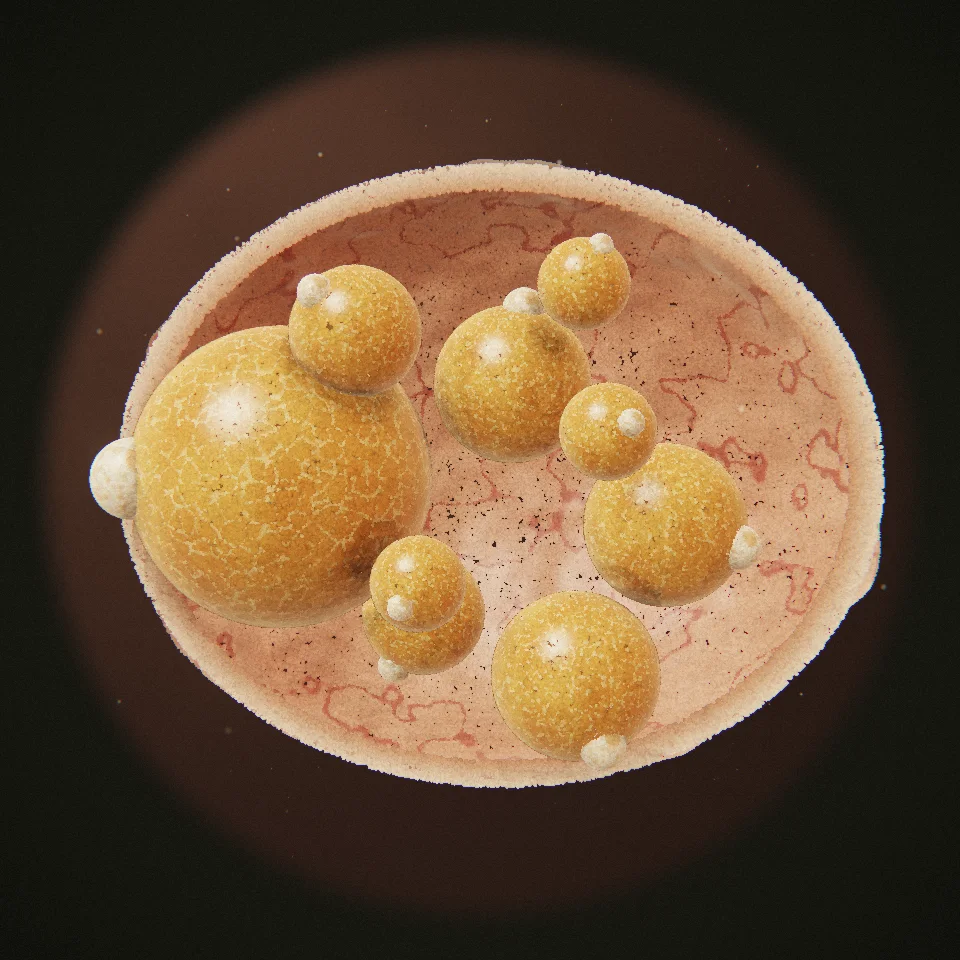
There is no baby yet. Pregnancy weeks are counted from the first day of your last period, about two weeks before fertilisation1. So during week 1 there is no embryo: this is the week of your period.
Pregnancy really begins when a sperm fertilises the egg, which usually happens about two weeks after your last period. That is why development is counted from week 21.
In the meantime, your body is getting ready. In each normal cycle, one of your ovaries usually releases an egg about 14 days after your last period. This is called ovulation. If the egg is not fertilised, it moves down into the uterus and leaves your body with your next period1.
Your body
This week you have your period. There are no pregnancy changes yet, because fertilisation has not happened1.
Counted from this day, pregnancy lasts about 40 weeks, or about 38 weeks from fertilisation2. Birth can happen at any time from week 372.
Pregnancy is divided into three trimesters. The first runs from week 0 to week 13 plus 6 days, the second from week 14 to week 27 plus 6 days, and the third from week 28 until the birth1.
How your due date is worked out
The estimated due date is calculated by adding 280 days, or 40 weeks, to the first day of your last period2. You can do it with the due date calculator.
It is an estimate. An ultrasound scan in the first trimester is the most accurate way to establish or confirm how far along the pregnancy is3.
If the pregnancy is from IVF, the date is worked out from the age of the embryo and the day of the transfer: 263 days later for a day-3 embryo, and 261 for a day-5 embryo3.
Health and tips
Folic acid. If you are trying to get pregnant, start folic acid at least a month before conception, at 0.4 to 0.8 mg a day, and keep taking it through the first 2 or 3 months of pregnancy4. The reason is that folate needs to be there in the first weeks after conception, often before you know you are pregnant5. It helps your baby’s nervous system form and offers some protection from conditions such as spina bifida6.
Folate in food. Dark green leafy vegetables, such as spinach, asparagus, Brussels sprouts and broccoli, are good sources. Even so, the folic acid in supplements is absorbed better than the folate in food5.
Smoking, alcohol and caffeine. For early pregnancy, the NHS advises stopping smoking and drinking alcohol, and going easy on tea, coffee and anything else with caffeine. Your midwife or doctor can help6.
Medicines. The organs form during the first weeks, and this is when the embryo is most vulnerable to medicines, drugs, viral infections and radiation. That is why, during pregnancy, you should only take medicines that are essential and known to be safe1. If you have a long-term condition, tell your specialist you are pregnant as soon as possible, and do not stop any regular medicine without talking to them first6.
Eating and moving. There is no need to eat for two: a varied, balanced diet with plenty of fruit and vegetables is enough. The recommendation is 150 minutes of exercise a week. If you are not active, you can start with a 10-minute brisk walk each day6.
Sexually transmitted infections. If you think you or your partner could have one, get checked, as it could affect your baby’s development6.
For your partner or supporter
If you are the partner or the person supporting her, the basic health advice applies to you too. Eating well is much easier when you do it together, and it is a good time to start habits you will want to pass on to your child7.
If you smoke, get help to stop. If you carry on, do not smoke near her or offer her cigarettes7.
A baby brings new responsibilities, and mixed feelings are normal, whether the pregnancy has been planned for a long time or comes as a surprise. Money can be a worry too: it may help to check what support you are entitled to and start planning ahead7.
When to get help
If you take a medicine regularly or have a long-term condition, tell your doctor as soon as you know you are pregnant, and do not stop it on your own6,1.
If you have been trying to get pregnant for a while without success, you can get advice about that too. IVF is one of the options when it is hard to get pregnant and other treatments have not worked8.
Frequently asked questions
Why does a pregnancy week count if I'm not pregnant yet?
Because the count starts on the first day of your last period, about two weeks before fertilisation.
When should I start taking folic acid?
At least a month before you start trying to get pregnant, and keep taking it through the first months of pregnancy.
Sources
- MSD Manual, versió per al públic. Stages of Development of the Fetus. msdmanuals.com.
- Hospital Clínic de Barcelona. Pregnancy and Childbirth. clinicbarcelona.org.
- American College of Obstetricians and Gynecologists (ACOG). Committee Opinion No 700: Methods for Estimating the Due Date (reafirmada el 2025). Obstet Gynecol 2017;129(5):e150-e154.
- US Preventive Services Task Force. Folic Acid Supplementation to Prevent Neural Tube Defects: Preventive Medication. Recomanació, 1 d’agost de 2023.
- Harvard T.H. Chan School of Public Health. Folate (Folic Acid): Vitamin B9. The Nutrition Source.
- National Health Service (NHS), Regne Unit. 4 weeks pregnant guide. NHS Best Start in Life.
- NHS 111 Wales. Dads and partners. 111.wales.nhs.uk.
- National Health Service (NHS), Regne Unit. IVF. nhs.uk.