Everything here is written from scientific sources. If you have any doubts, check the original sources.
Your baby this week
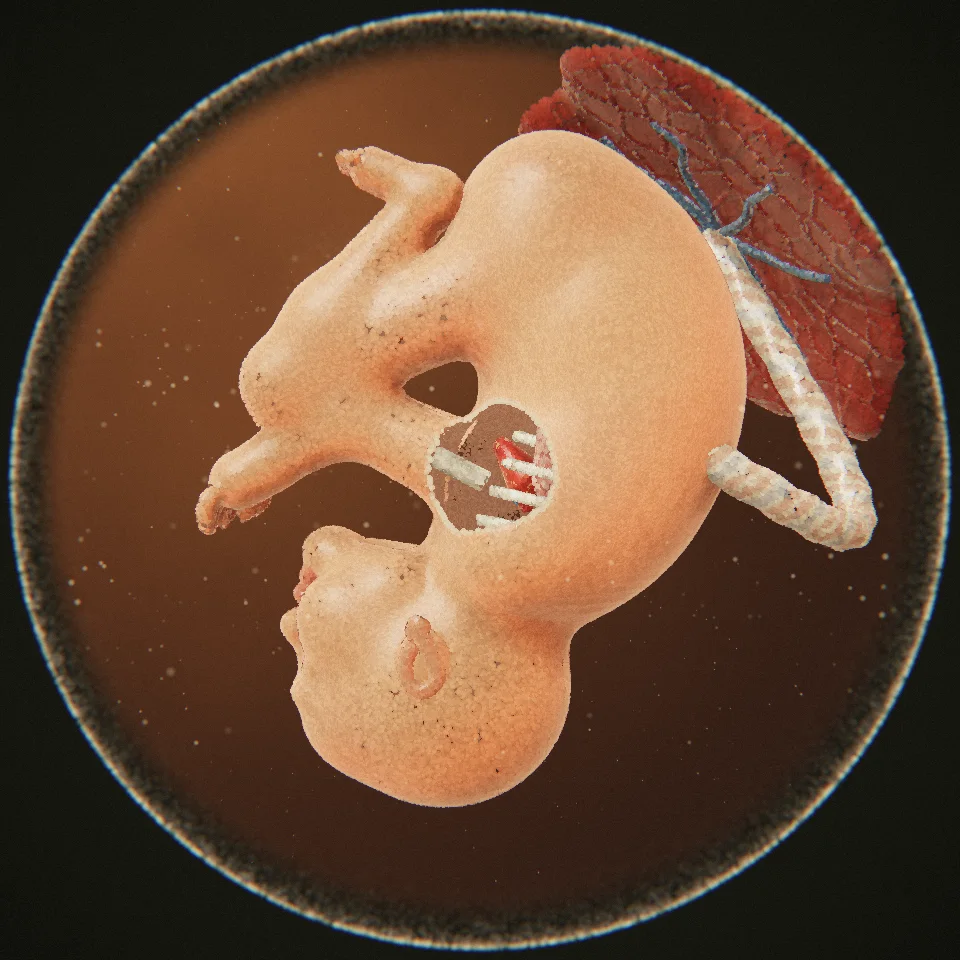
Your baby is about 51.2 cm from head to heel, roughly the size of a pumpkin1. The WHO median estimated fetal weight for this week is 3,617 g2.
Your baby is quite squashed now but should still be moving in their usual pattern. Movements should not slow down or stop: if they do, it could be an important sign that something is wrong. If you notice any change, call your midwife or maternity unit straight away. There will be someone there to answer calls 24 hours a day1.
Reaching your due date does not mean labour has to start today. Weeks 41+0 to 41+6 are late term, and 42+0 onwards is post-term3. At your week 38 appointment you will already have talked about what might happen if you go beyond 41 weeks, when you may be offered an induction4.
Your body
If this is your first baby, you will have an antenatal appointment this week. Your blood pressure will be checked, your bump measured and you will give a urine sample, to check for pre-eclampsia, a serious condition marked by high blood pressure and protein in the urine1.
You are probably getting lots of practice contractions, which should not be painful. Real contractions hurt when your bump goes tight, and the pain goes away when the muscles relax. Feeling like you have PMT, or having lower backache, can be early signs of labour1.
Labour has 3 stages1:
- First. You have contractions and your cervix opens up to 10 cm. This usually lasts 6 to 12 hours, or less if you have had children before.
- Second. Your baby is born.
- Third. The placenta comes out.
Health and tips
The NHS suggests some tips to help you feel in control and manage pain1:
- If contractions start at night, try to sleep through as much as you can. The rest will help, and your cervix will dilate while you sleep.
- If they start in the day, staying upright and active helps your baby move down and your cervix open.
- Try different positions. Rock on a birth ball, or lean on the person supporting you.
- A warm bath or shower is a tried and tested way to ease pain.
- Focus on your breathing. Breathe in through your nose and out through your mouth, with your jaw relaxed. You can practise now.
- Eat something healthy to keep your energy up, like a banana or low-fat yoghurt. Avoid fatty foods, which could make you feel sick, and sugary foods.
- Do something that relaxes you. If you feel calm, you will manage labour and pain better.
Bringing on labour at home. There are no proven ways to do this safely. Get advice from your midwife or doctor before trying anything other than watching and waiting1.
Newborn screening. Soon after birth, you will be offered screening tests for your baby, so they can get treatment if needed. Your decision about whether to have them will be respected1.
For your partner or supporter
If you are the partner or the person supporting her, you can give her a massage during labour and be involved throughout. Your support and reassurance help her body produce endorphins, which are natural painkillers1.
Being at the birth should be something you are both happy with. If you would rather not be there, talk about it and listen to how she feels: a friend or relative might be able to go with her instead5.
After the birth, some mothers become depressed or anxious and need a lot of extra support. Learn to spot the signs of postnatal depression. You can get depressed too, and you need support as well: keep talking and listening to each other. If you feel low, see your doctor5.
When to get help
Call your hospital or midwife when your contractions last at least 60 seconds and come every 5 minutes1.
If you think your waters have broken, call your midwife or doctor, even if it is only a trickle1. If your baby is moving less, do not wait: call straight away1.
Get urgent help if you have vaginal bleeding, a terrible headache that will not go away, vision problems, pain below the ribs, extreme swelling of the face, hands or feet, or a temperature above 37.5 °C with no other symptoms6.
Frequently asked questions
How big is the fetus at week 40 of pregnancy?
According to the NHS, it is about 51.2 cm, head to heel. The WHO median estimated weight is 3,617 g.
Can I bring on labour at home?
There are no proven ways to do so safely. Get advice before trying anything.
How long does the first stage of labour last?
According to the NHS, it usually lasts 6 to 12 hours, or less if you have had children before.
Sources
- National Health Service (NHS), Regne Unit. 40 weeks pregnant guide. NHS Best Start in Life.
- World Health Organization (Kiserud T, et al.). The World Health Organization Fetal Growth Charts: A Multinational Longitudinal Study of Ultrasound Biometric Measurements and Estimated Fetal Weight. PLoS Med 2017;14(1):e1002220.
- ACOG; Society for Maternal-Fetal Medicine. Committee Opinion No 579: Definition of Term Pregnancy. Obstet Gynecol 2013;122(5):1139-1140.
- National Health Service (NHS), Regne Unit. 38 weeks pregnant guide. NHS Best Start in Life.
- NHS 111 Wales. Dads and partners. 111.wales.nhs.uk.
- National Health Service (NHS), Regne Unit. 39 weeks pregnant guide. NHS Best Start in Life.
- Hospital Clínic de Barcelona. Pregnancy and Childbirth: alarm signs. clinicbarcelona.org.